The Idea
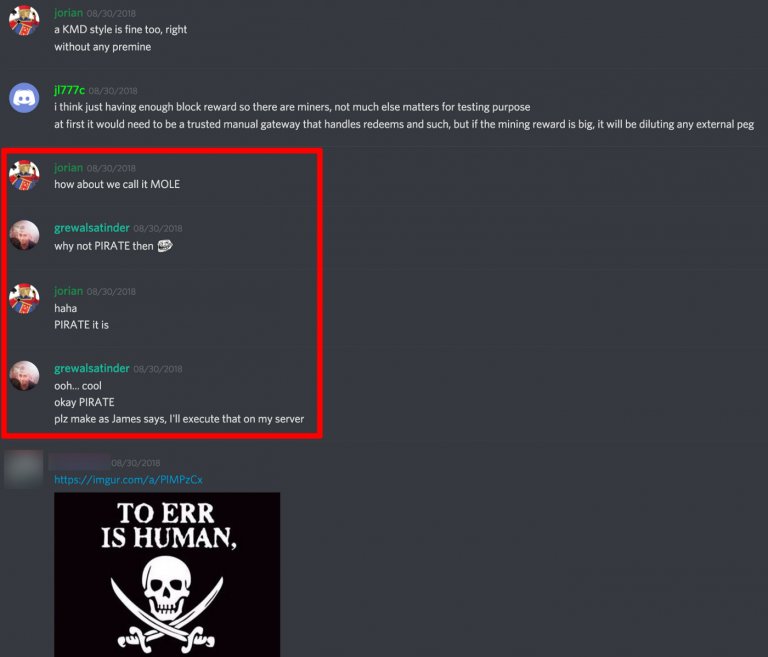
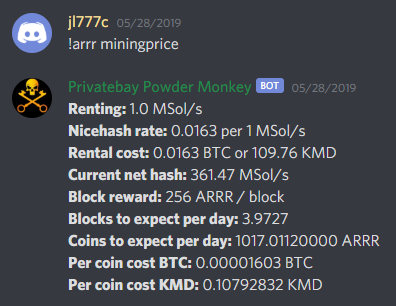
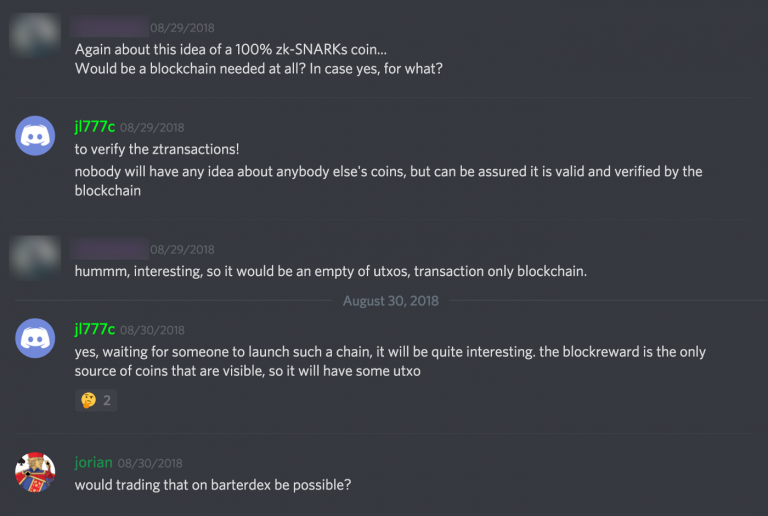
A question in the #ask-jl777 channel on Komodo’s Discord server starts the discussion.

Discover the milestones we've navigated from inception to horizon.
Pirate Chain's Journey Begins


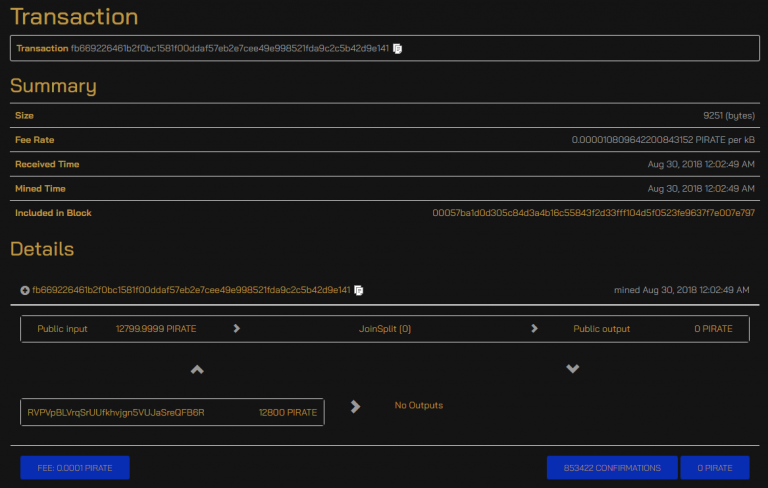
Pirate Chain launches later that day, turning the initial Discord discussion into a live ARRR blockchain.
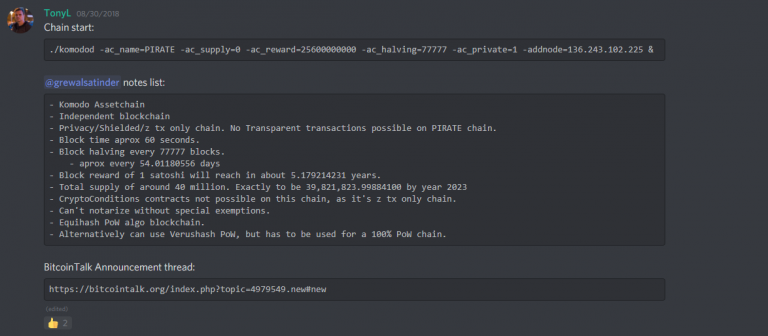
Pirate Chain’s first block is mined, beginning the blockchain’s recorded history and the issuance of ARRR.
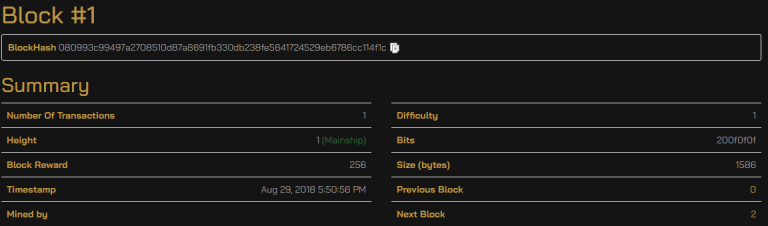
Komodo dedicates a channel named #pirate to the Pirate Chain community on its official Discord server.
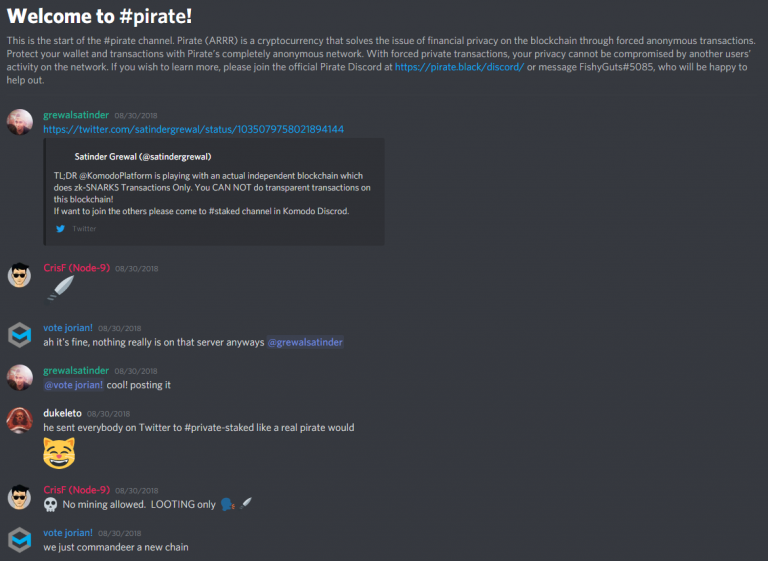
grewalsatinder announces Pirate Chain on Bitcointalk, introducing the project to the crypto community.
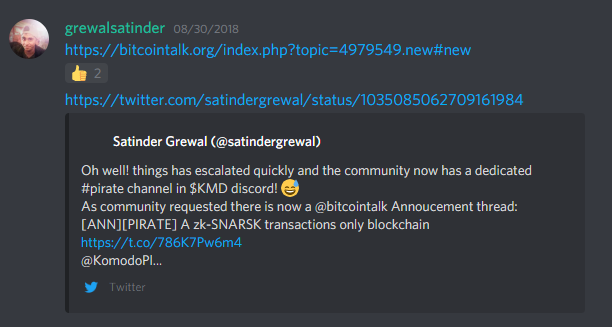
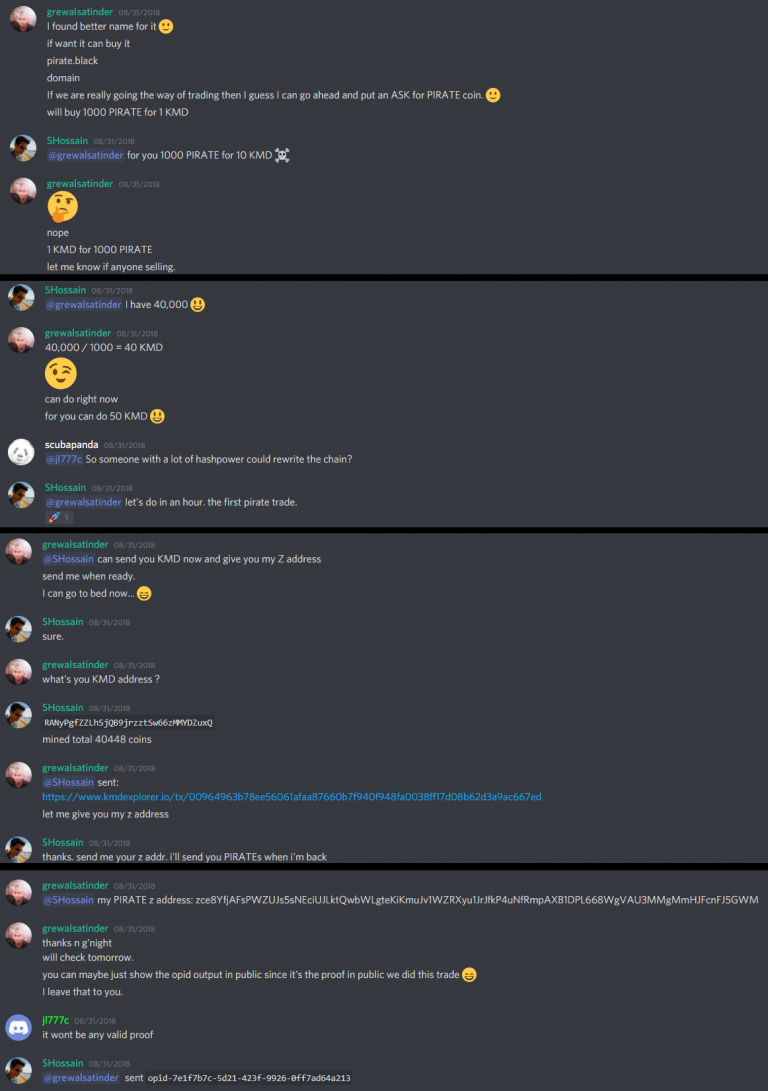
Grewalsatinder and SHossain perform the first OTC transaction. SHossain sells 40,000 ARRR to grewalsatinder for 50 KMD.
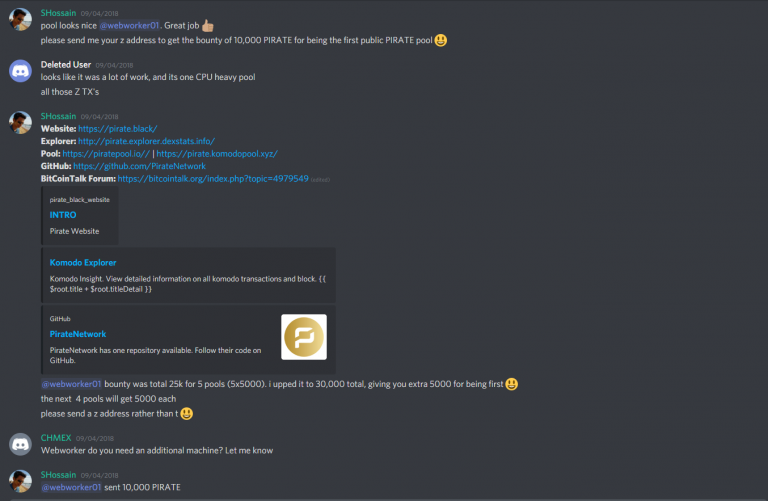
Webworker01 creates the first public Pirate Chain mining pool (piratepool.io).
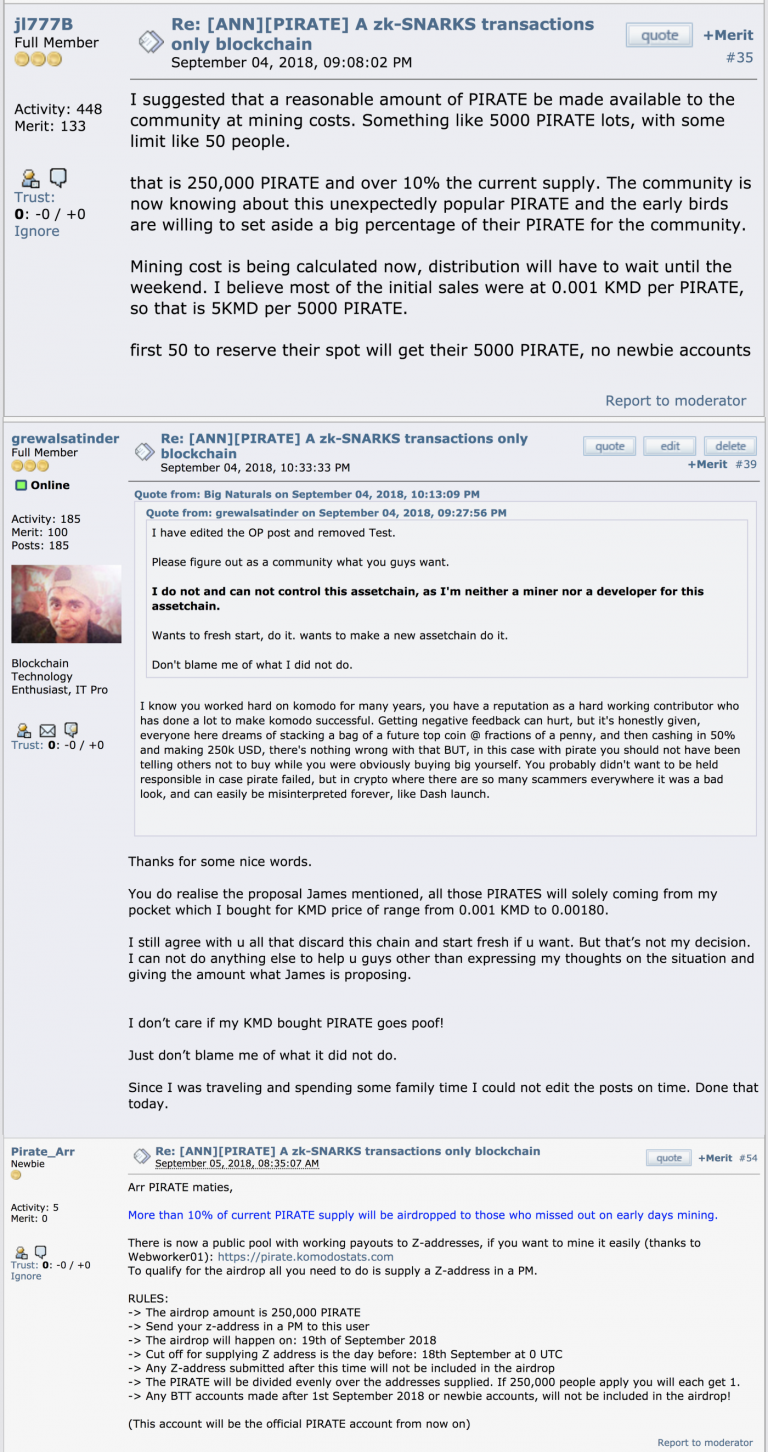
While grewalsatinder is on holiday, the Bitcointalk announcement thread is not updated with news about Pirate Chain. This leads to arguments and calls to restart the chain. Many community members have already been mining ARRR for about a week, so jl777 proposes a giveaway of 250,000 ARRR, roughly 10% of the circulating supply at the time.
With a hard fork planned to add dPoW, jl777 proposes increasing the interval between block reward halvings to encourage more miners to join and secure the network. He also proposes increasing the total supply to 200 million ARRR.
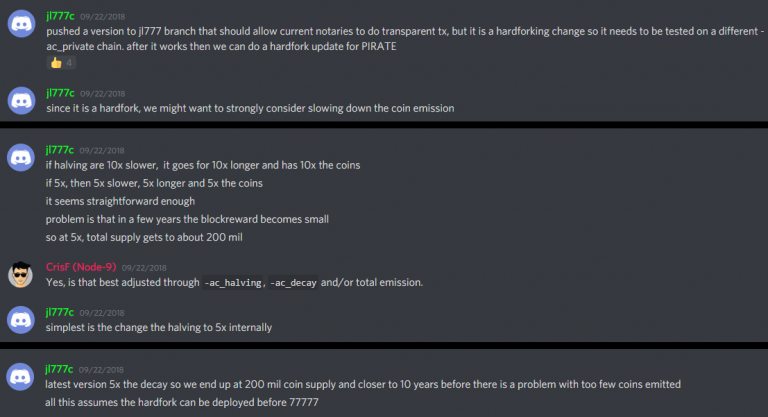
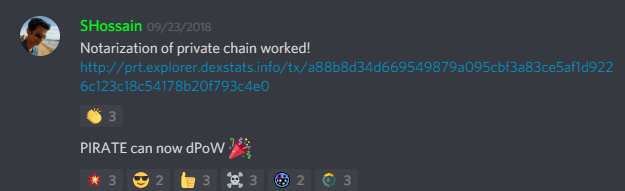
SHossain announces: “Notarization of private chain worked!” The successful tests use a separate chain called TXSCLPRT with the same parameters as Pirate Chain. A hard fork the following day integrates dPoW. The interval between halvings is also increased fivefold, raising the total supply to approximately 200 million ARRR.
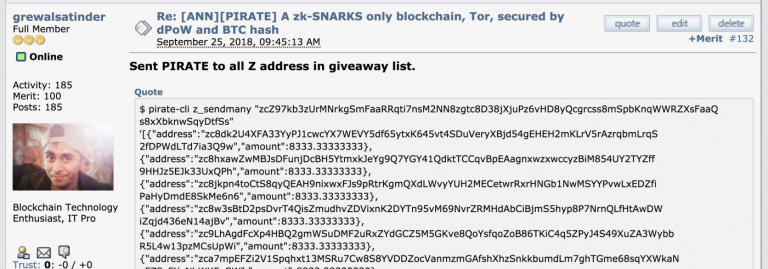
grewalsatinder carries out the community-managed 250,000 ARRR giveaway proposed on September 4, sending 8,333.33333333 ARRR to each of 30 z-addresses.
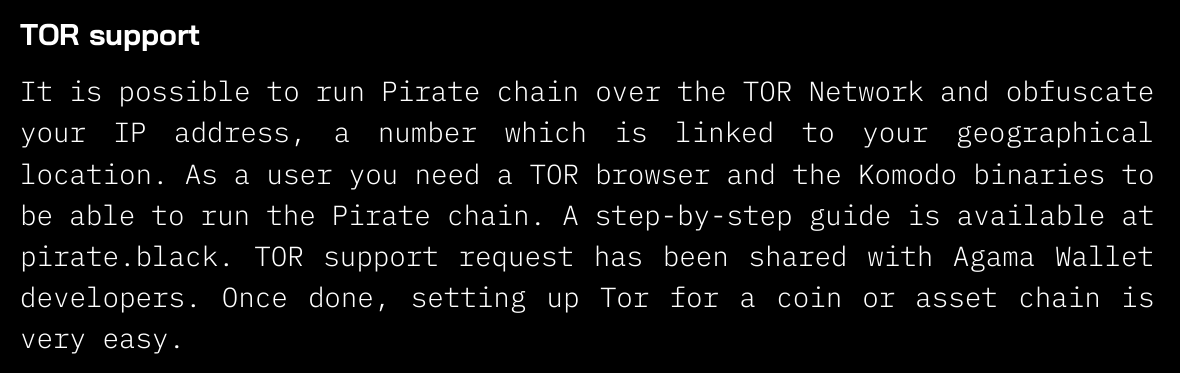
Satinder Grewal publishes tested settings for running Pirate Chain through Tor, helping node operators hide their IP addresses using a local proxy and optional onion-only connections.
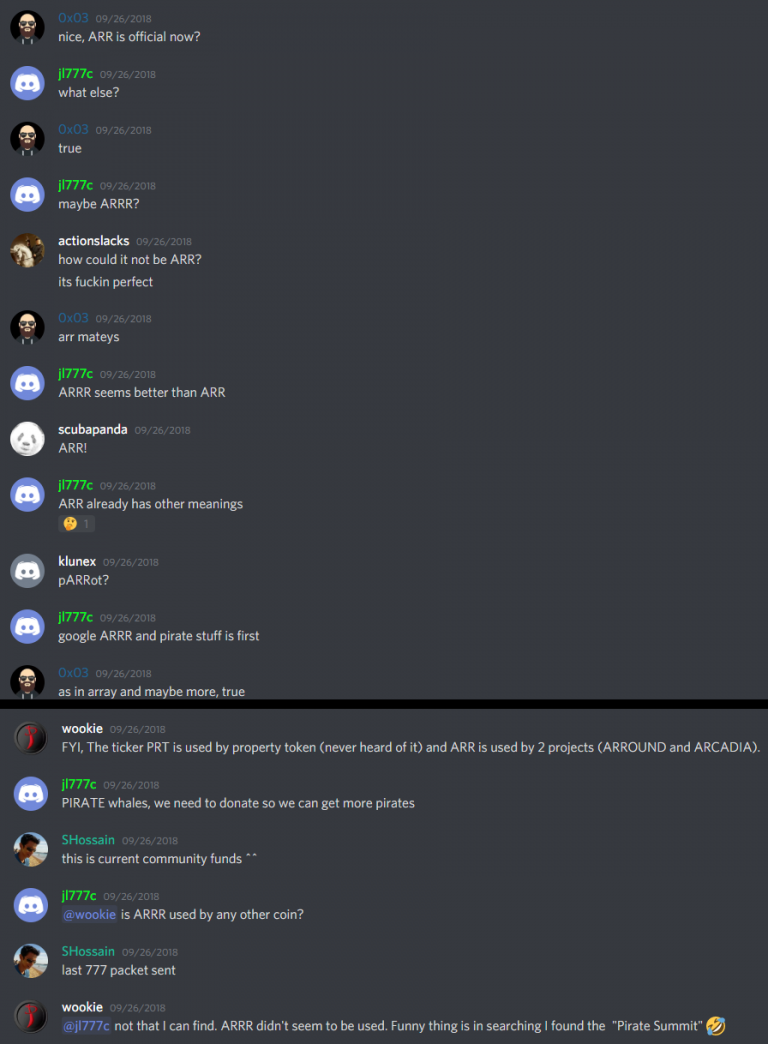
jl777c proposes “ARRR”, which becomes the ticker symbol for Pirate Chain’s currency.
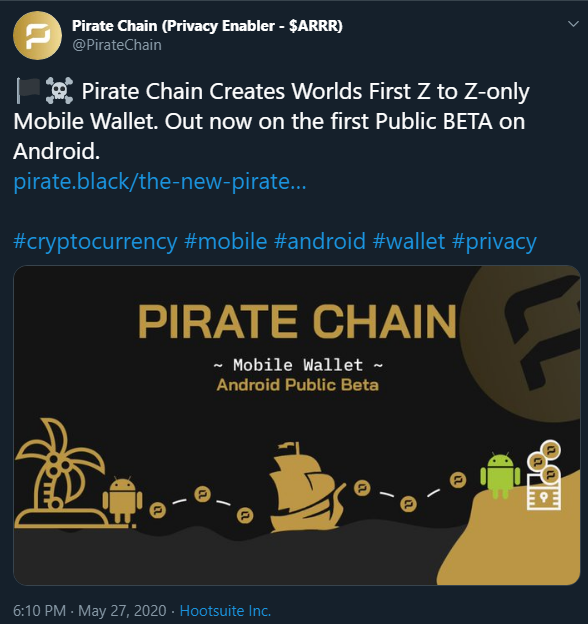
Pirate Chain joins Twitter with its first tweet, creating a public channel for project news and community updates.
The /r/PirateChain subreddit launches, giving the community a place to share project news and discuss ARRR.

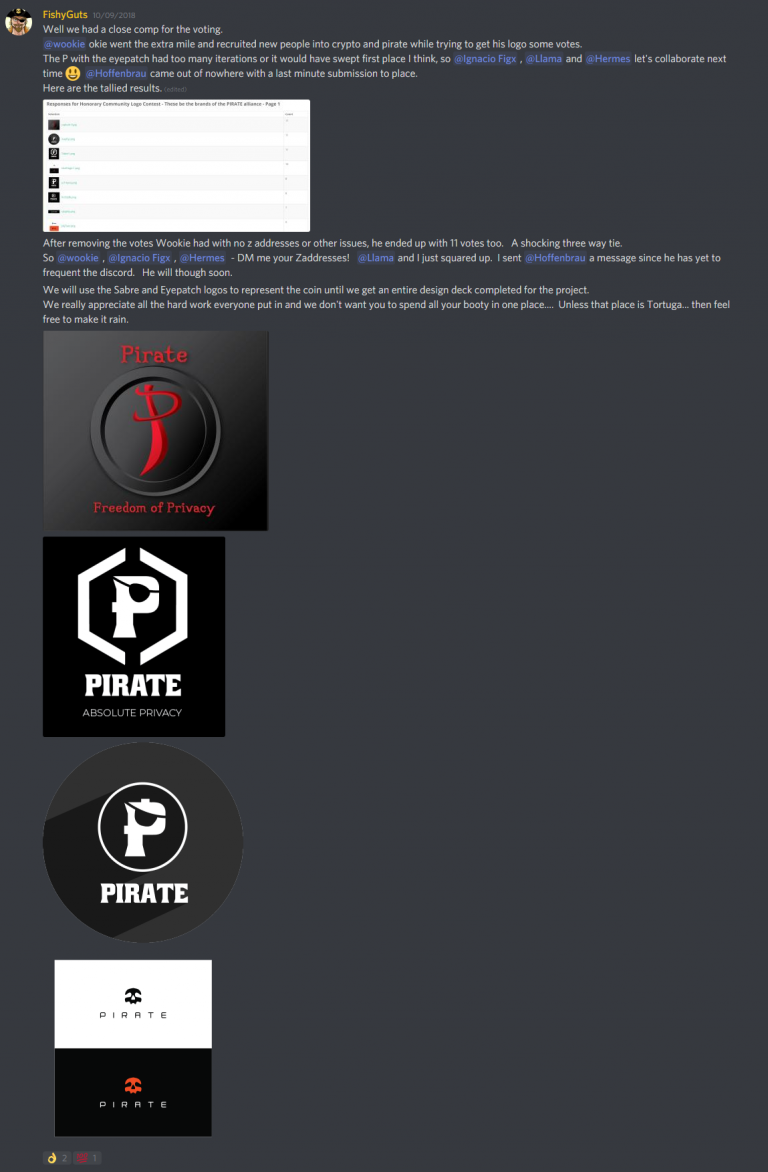
The logo contest winners are announced, and Pirate Chain receives its first official set of logos.
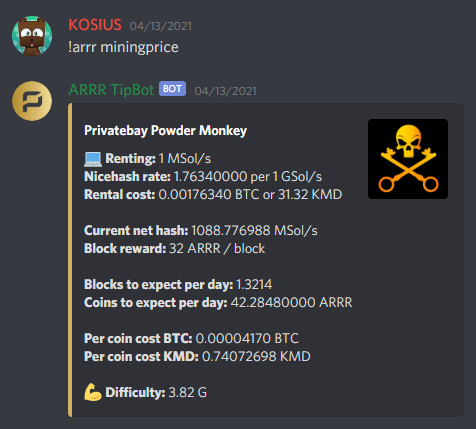
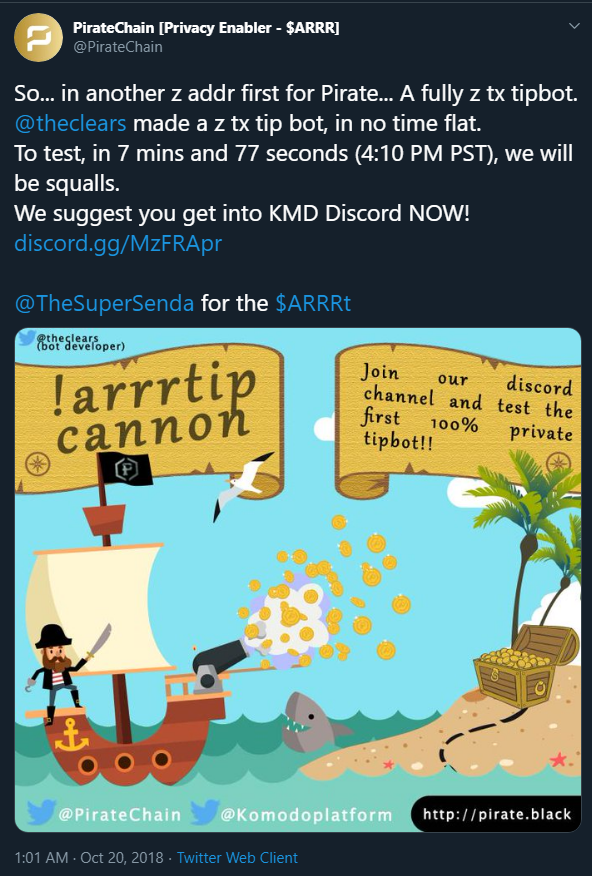
The Discord tip bot is released. FishyGuts tries the command “!arrrtip squall 500”, which breaks the bot.
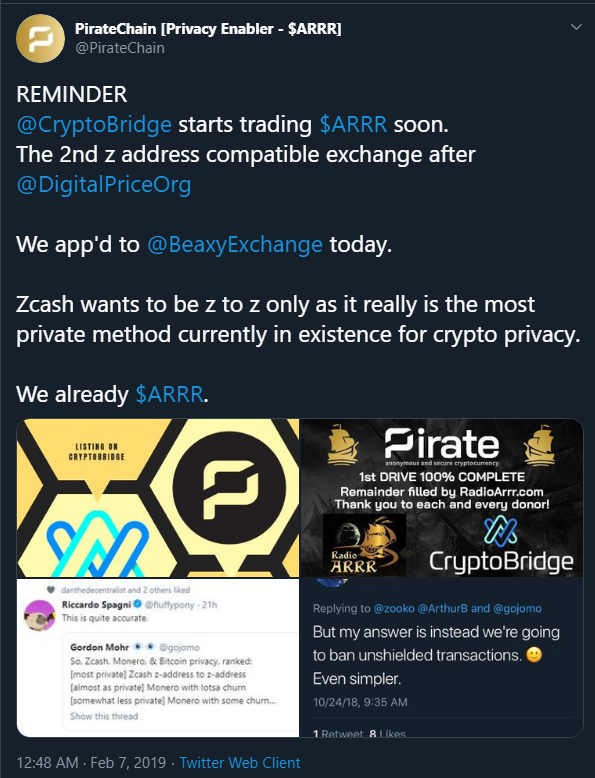
DigitalPrice.io lists ARRR, becoming the first exchange to support z-address deposits and withdrawals.

Delta adds ARRR to its tracking app, letting users follow their holdings alongside other cryptocurrencies.
Blockfolio adds ARRR to its tracking app, letting users follow their holdings alongside other cryptocurrencies.
The official Pirate Chain Discord launches, giving users and contributors a dedicated space for project discussion.
CoinPaprika becomes the first coin-tracking website to list ARRR, making its market data easier to find.

jl777 develops the standalone zMigrate tool to automate ARRR’s upcoming Sprout-to-Sapling migration, moving funds between shielded pools while users retain control of their keys.
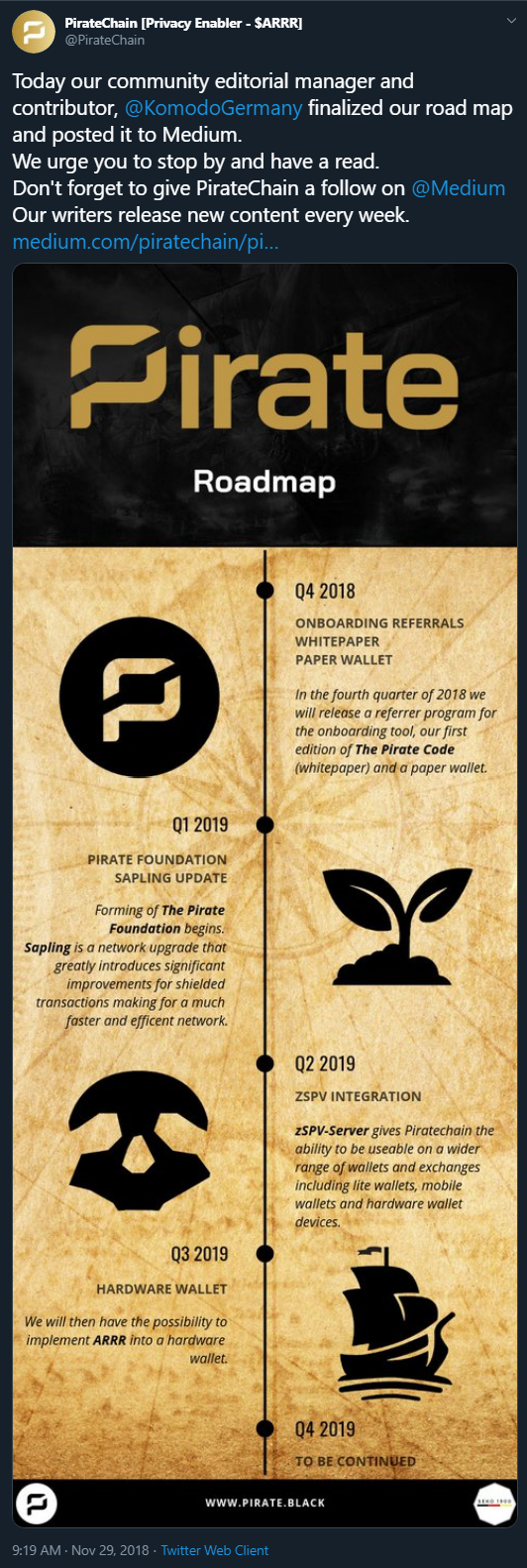
Pirate Chain releases its first roadmap, setting out the planned next steps for the project’s development.
Pirate Chain releases The Pirate Code, its first whitepaper outlining the project’s privacy-focused design.
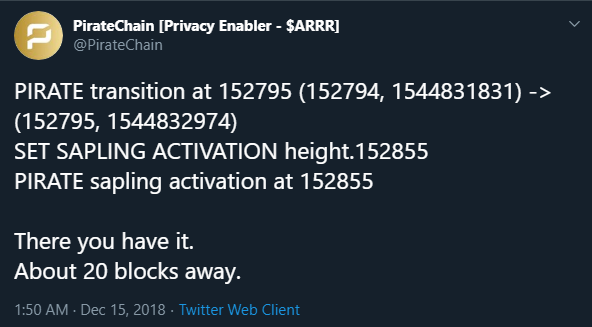
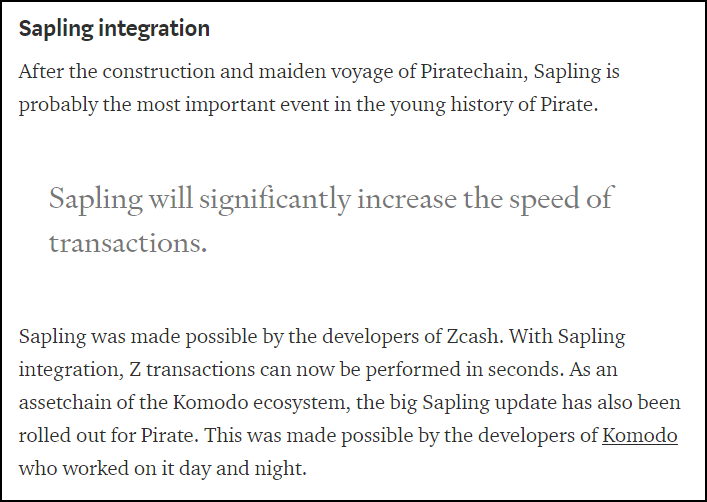
Pirate Chain announces Sapling activation at block 152,795. Users have until February 15, 2019, to migrate their funds from zc (Sprout) addresses to zs (Sapling) addresses.
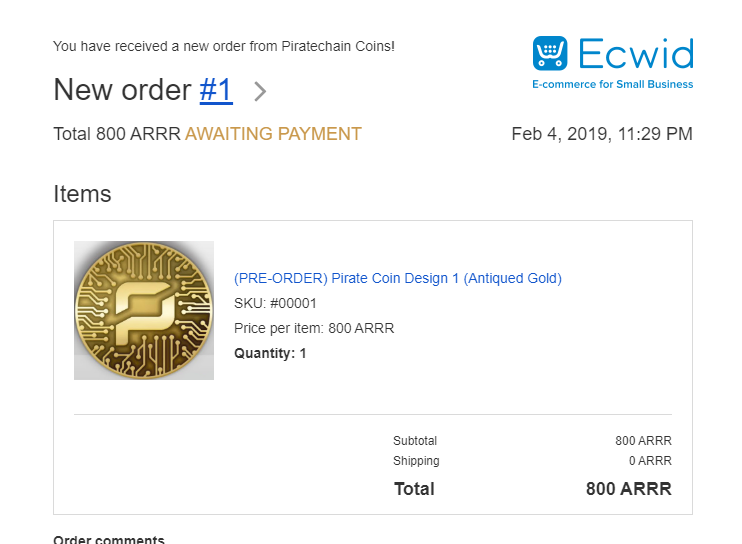
The first ARRR z-commerce transaction takes place after PirateChainCoins, later renamed PhysicalCryptoCoins.com, accepts ARRR as payment.
CoinGecko lists ARRR, allowing users to follow its price, trading volume and market data on the tracking website.
Pirate Chain closes the Sprout-to-Sapling migration window and disables Sprout transactions. The remaining 1,294,335 ARRR in the Sprout pool becomes permanently locked and is removed from circulation.
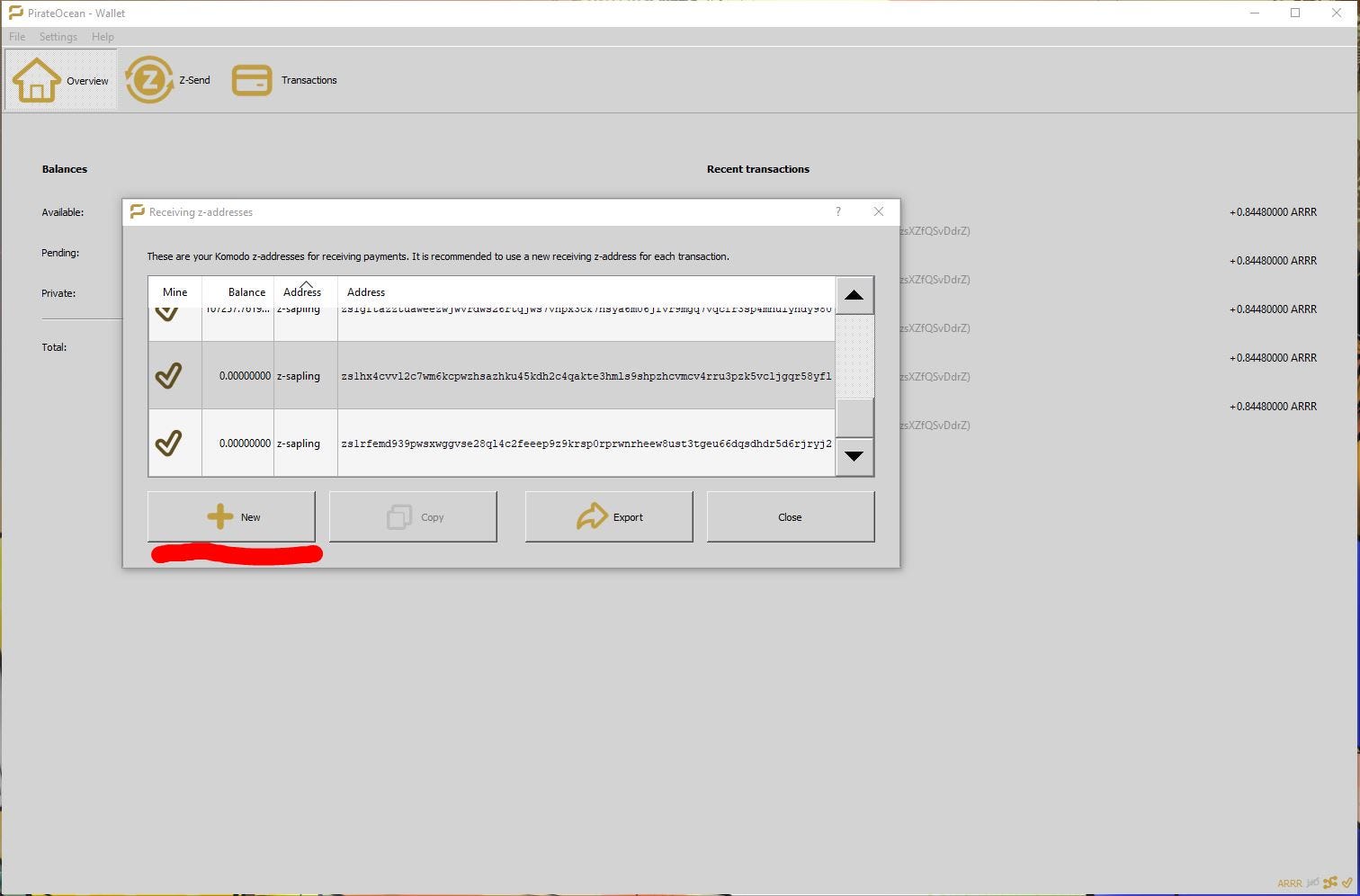
ComputerGenie’s Pirate Ocean Beta1 is announced, giving ARRR users a native Qt desktop wallet that runs a full node for sending and receiving shielded payments.
Citex and Escodex list ARRR, becoming the third and fourth exchanges with z-address support.
CoinMarketCap lists ARRR, adding its price, trading volume and market capitalization to the tracking website.

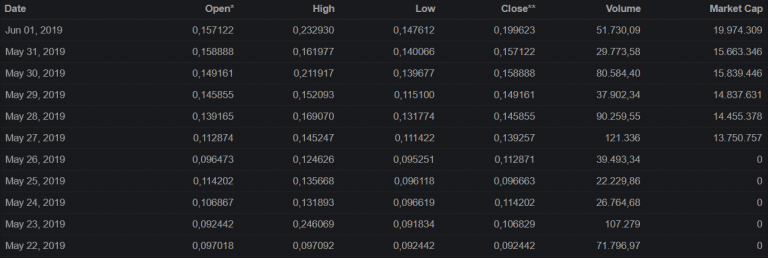
ARRR’s daily trading volume passes $100,000, reaching a six-figure milestone for reported exchange activity.
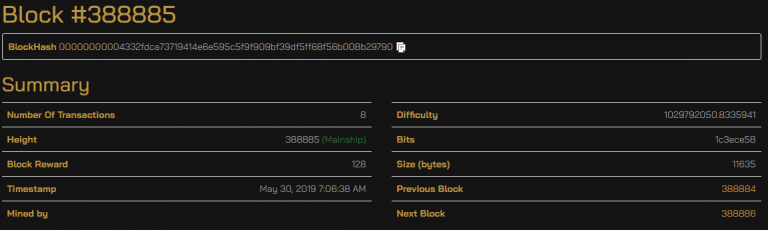
Pirate Chain’s block reward drops from 256 ARRR to 128 ARRR per block at the first halving.
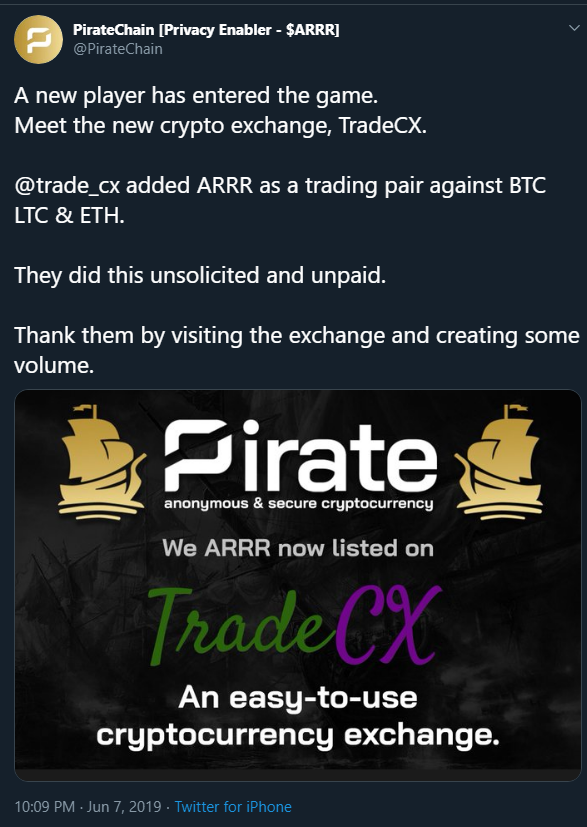
TradeCX lists ARRR without a listing fee, becoming the seventh exchange to offer trading in ARRR.
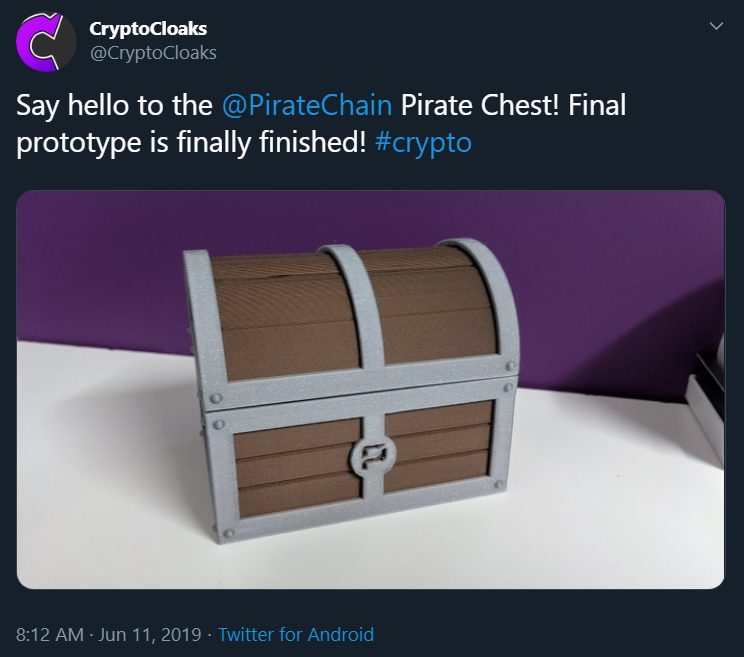
CryptoCloaks completes the Pirate Full Node Chest prototype, a node housed in a miniature treasure chest.
The Twitter bot @oldbucaneer starts sending ARRR as a reward for interactions with the @PirateChain Twitter account.
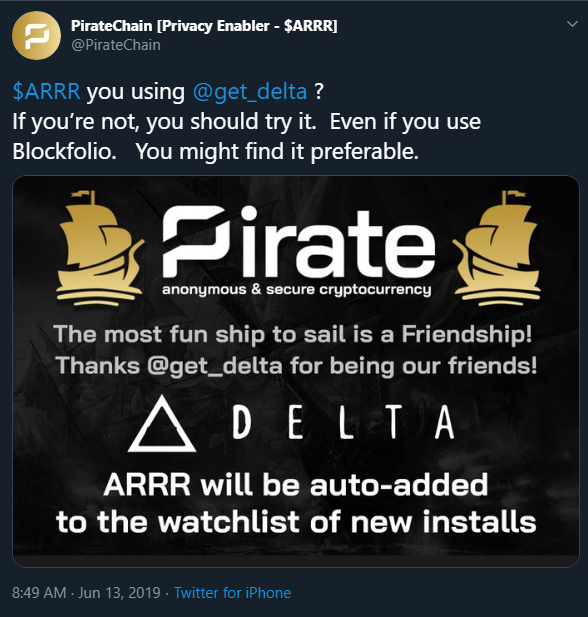
Delta begins adding ARRR to the watchlist of new app installs, making its market data visible from the start.
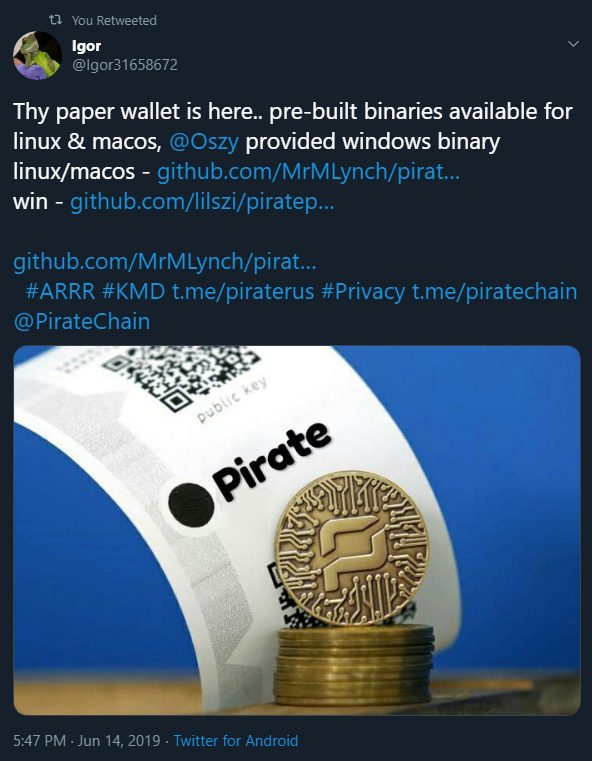
A paper wallet generator for ARRR is released, allowing users to create shielded addresses and keep their keys offline.
Zaddex.io lists ARRR, becoming the ninth exchange to offer trading in Pirate Chain’s currency.
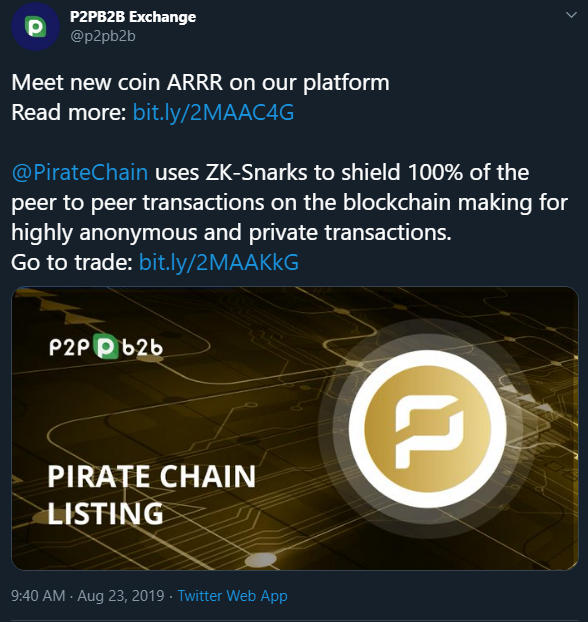
P2PB2B lists ARRR, becoming the tenth exchange to offer trading in Pirate Chain’s currency.
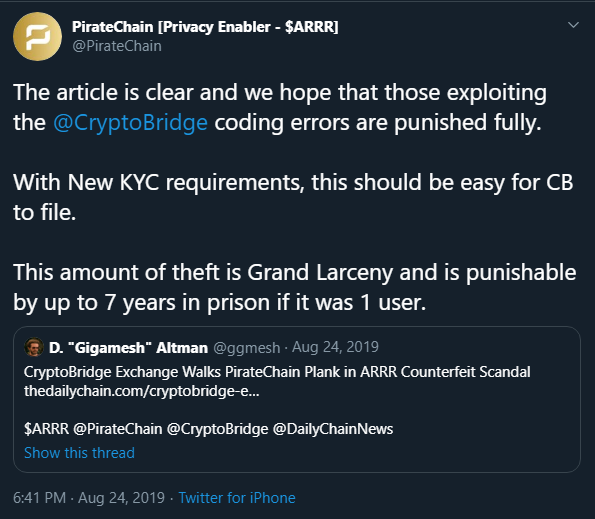
An accounting bug at the CryptoBridge exchange leads to the “counterfeiting” of up to 1.8 million ARRR, almost 2% of the total supply at the time.
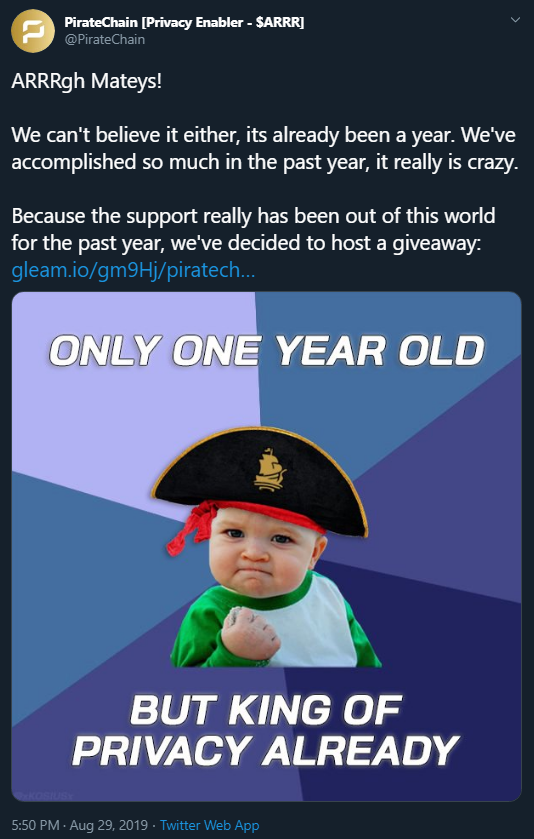
Pirate Chain celebrates its first birthday, marking one year since the launch of its shielded blockchain.
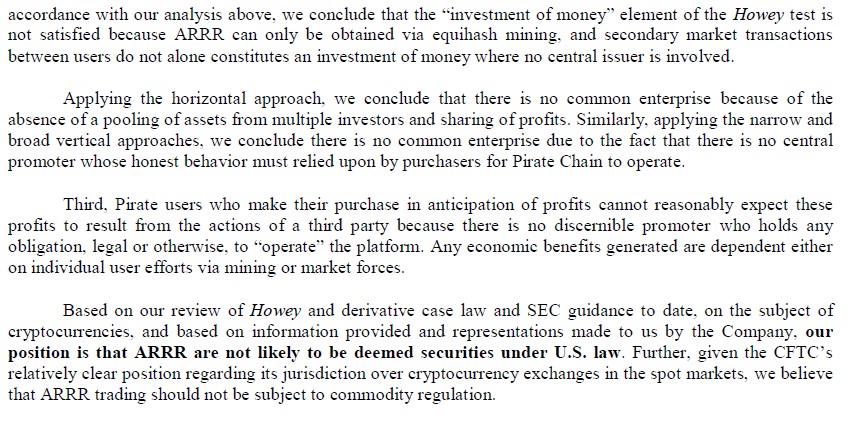
Pirate Chain announces The Crypto Lawyers’ Howey analysis. The firm’s January 20, 2019 opinion concludes ARRR is unlikely to be classified as a security under U.S. federal law.
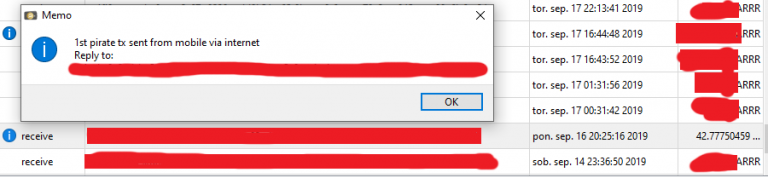
MrLynch sends ARRR and a memo to KOSIUS using an app running natively on a smartphone. This marks the first mobile ARRR transaction.
Nik Patel publishes a report on ARRR, examining Pirate Chain’s community, development and price history.
Binance Info adds an ARRR profile, giving Pirate Chain a presence on its cryptocurrency information platform.
Members of the Pirate Chain team attend Pirates Week in the Cayman Islands.

Pirate Chain partners with Turtle Network to work on a point-of-sale system.

Pirate Chain releases its lite wallet, enabling shielded ARRR payments without downloading the full blockchain.
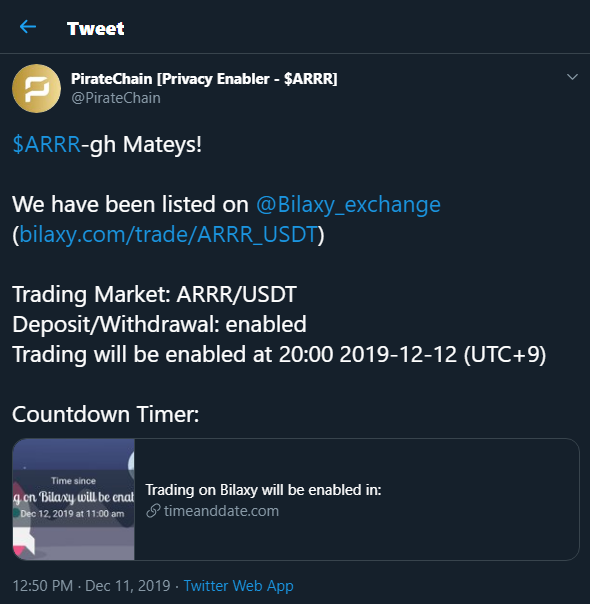
Bilaxy becomes the eleventh exchange to list ARRR, opening trading with an ARRR/USDT pair.
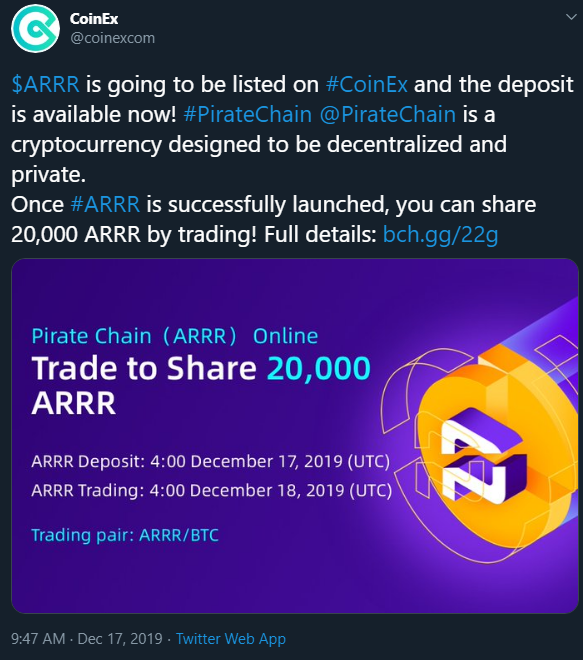
CoinEx becomes the twelfth exchange to list ARRR and celebrates with a 20,000 ARRR trading competition.
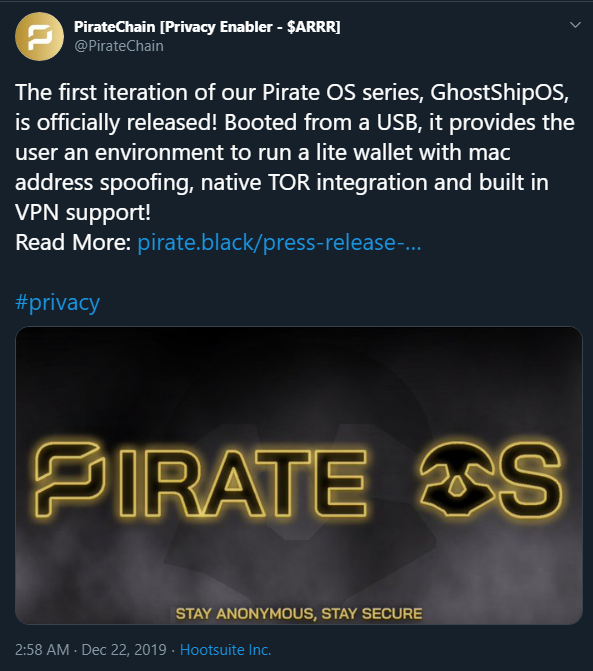
GhostShip OS launches as a USB-bootable environment for the lite wallet, with Tor integration and VPN support.
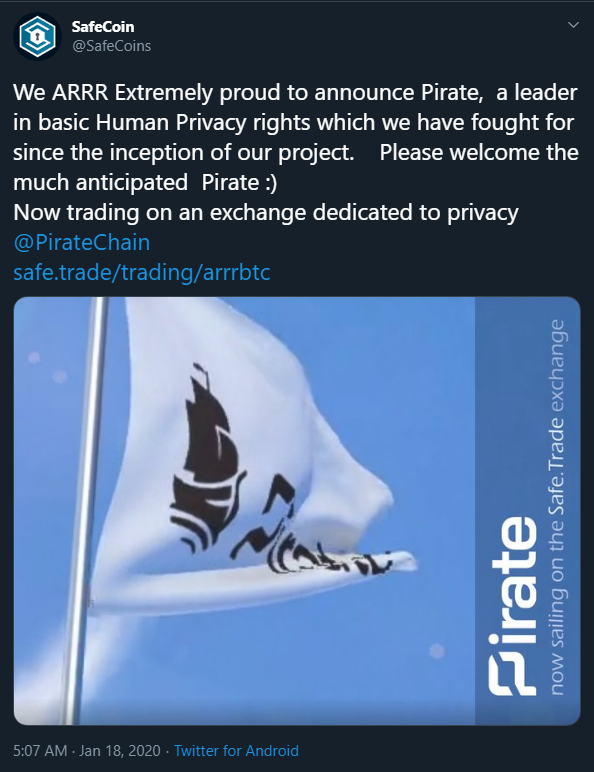
SafeTrade lists ARRR, becoming the thirteenth exchange to offer trading in Pirate Chain’s currency.
Pirate Chain partners with Sentinel to bring decentralized VPN connectivity to the Pirate OS environment.

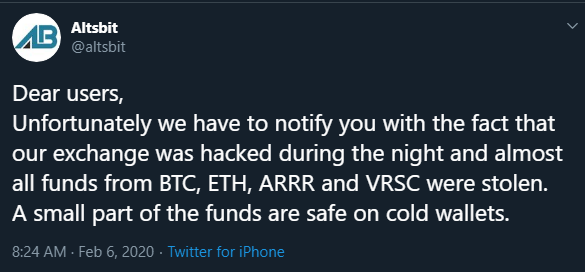
AltsBit (formerly DigitalPrice), the first exchange to list ARRR, is hacked. Of the 9,619,754 ARRR held on the exchange, 3,924,082 ARRR are stolen.
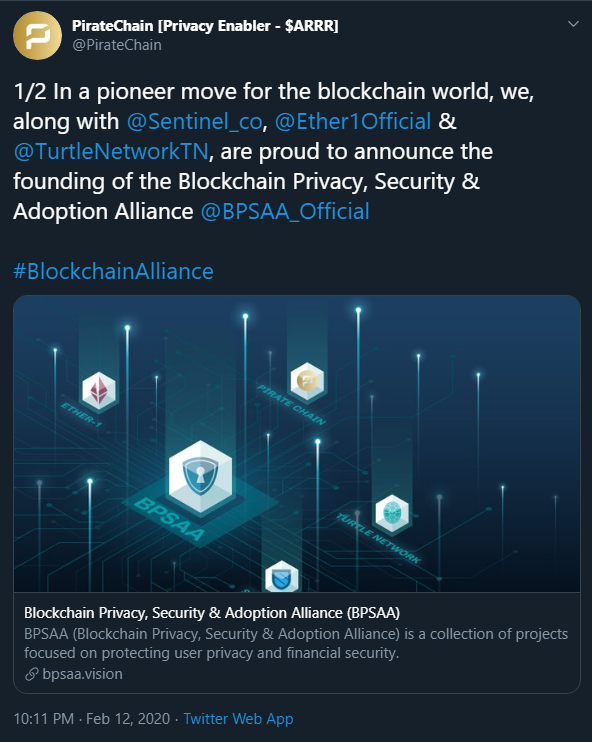
Pirate Chain, Sentinel, Ether-1, and Turtle Network form the Blockchain Privacy, Security & Adoption Alliance.
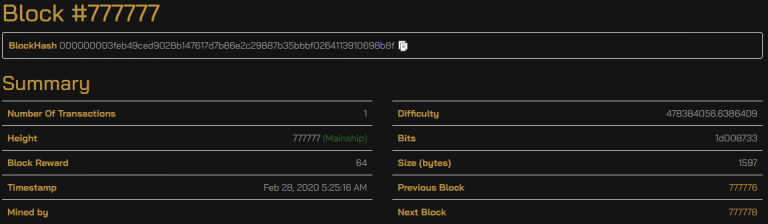
Pirate Chain’s block reward drops from 128 ARRR to 64 ARRR per block at the second halving.
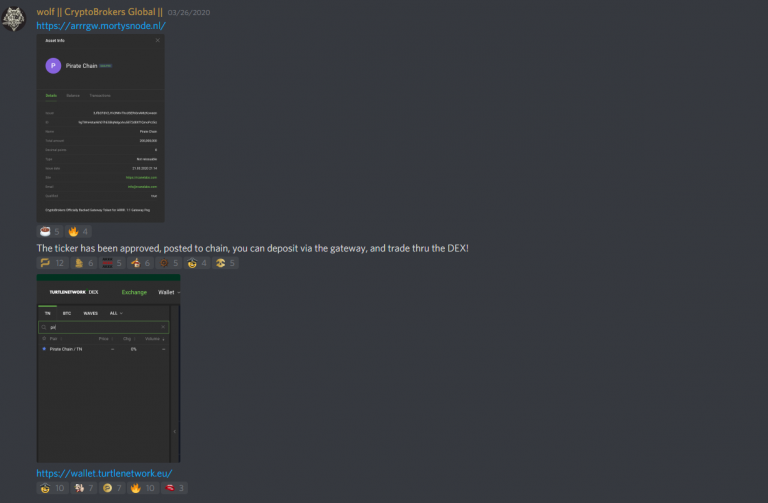
TurtleNetwork DEX lists ARRR, giving users a decentralized trading option as its fifteenth exchange listing.
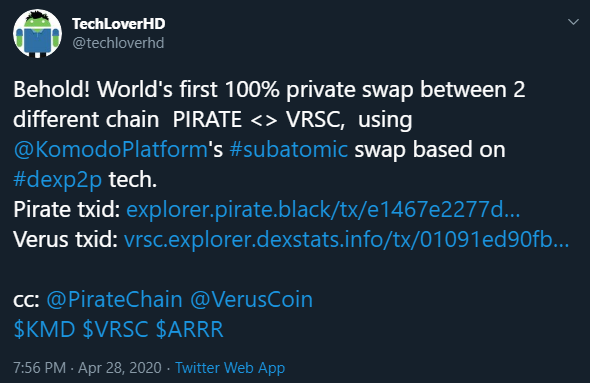
SHossain completes the first 100% private subatomic swap between the Pirate Chain and Verus blockchains.
ARRR’s daily trading volume passes $1 million, reaching a seven-figure milestone for reported exchange activity.

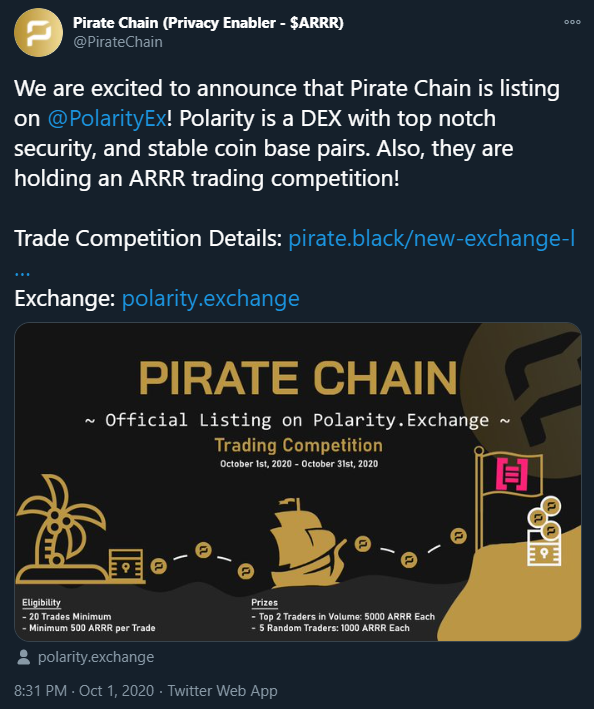
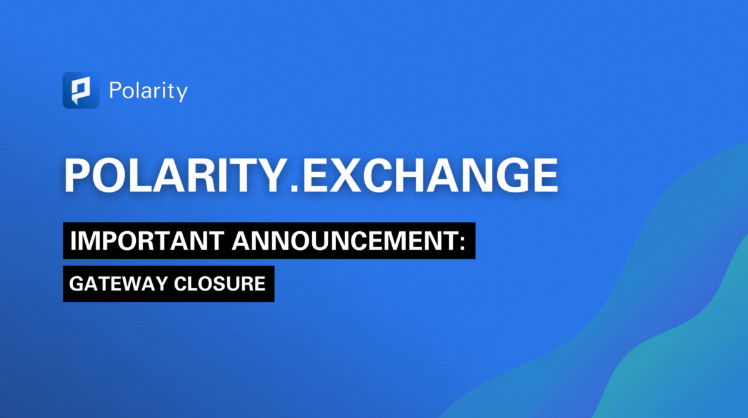
Polarity lists ARRR, becoming the sixteenth exchange to offer trading in Pirate Chain’s currency.
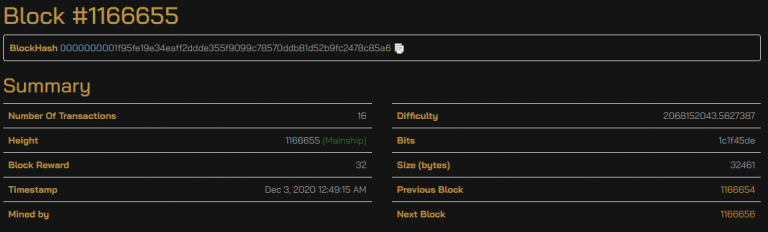
Pirate Chain’s block reward drops from 64 ARRR to 32 ARRR per block at the third halving.
Pirate Ocean v3.1.0 adds extended full viewing keys for incoming and outgoing ARRR transactions, plus tools to recover complete wallet history.
Pirate Ocean becomes Treasure Chest with the v5.0.0 release, adding shielded memos and easier key import and export through the wallet interface.

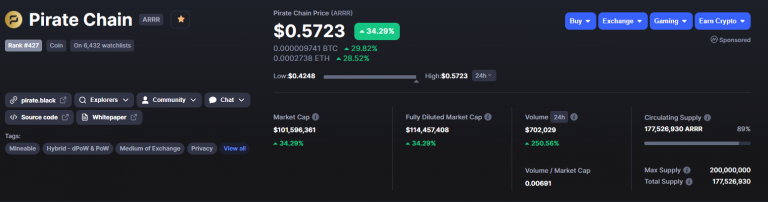
ARRR’s market capitalization passes $100 million, based on the market price of its circulating supply.
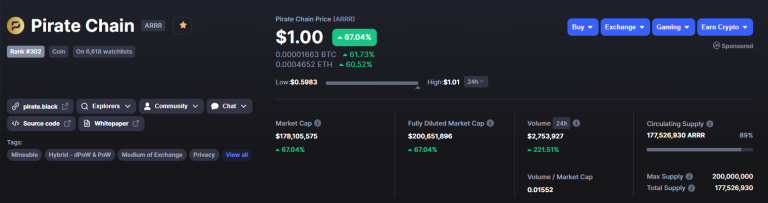
ARRR reaches a market price of $1 per coin, a price milestone for Pirate Chain’s native cryptocurrency.
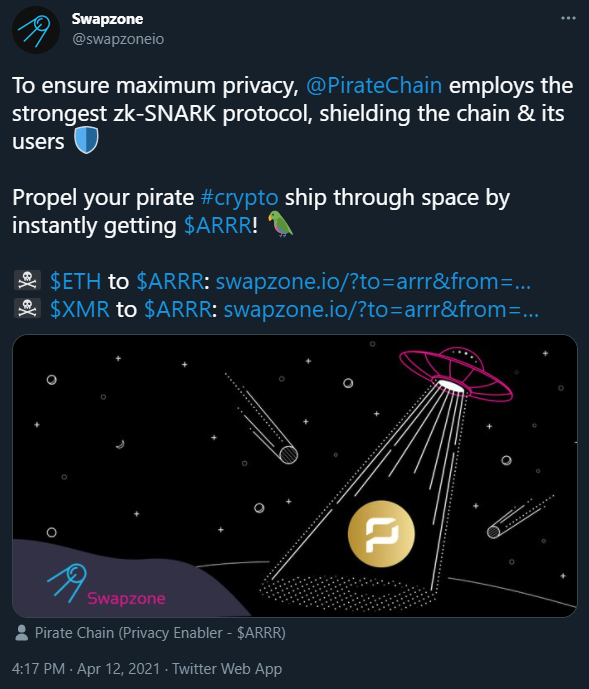
Swapzone lists ARRR, adding another cryptocurrency swap option as Pirate Chain’s seventeenth exchange listing.
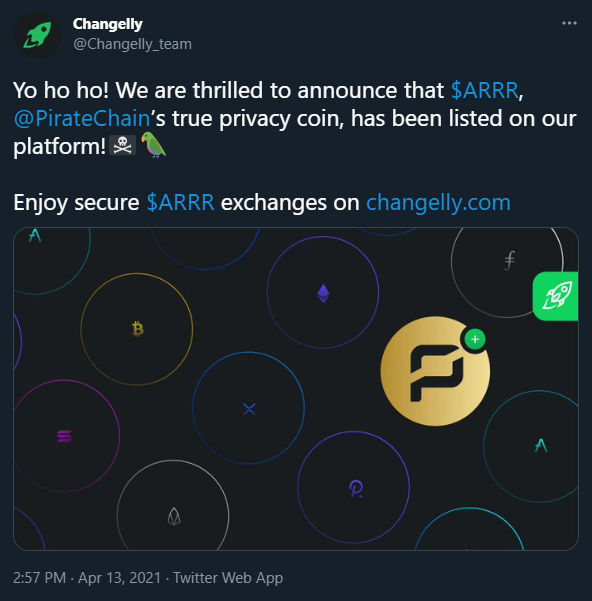
Changelly adds ARRR to its cryptocurrency swap service, becoming Pirate Chain’s eighteenth exchange listing.
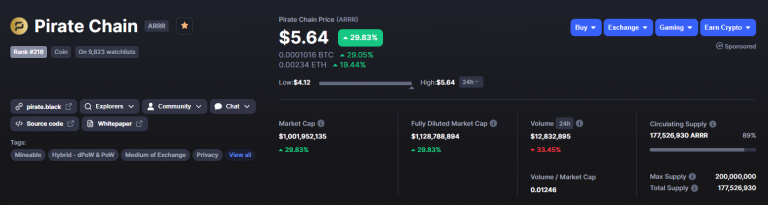
ARRR’s market capitalization passes $1 billion, based on the market price of its circulating supply.
Treasure Chest v5.1.1 adds diversified Sapling addresses, letting users create fresh receiving addresses under one spending key instead of managing separate keys.
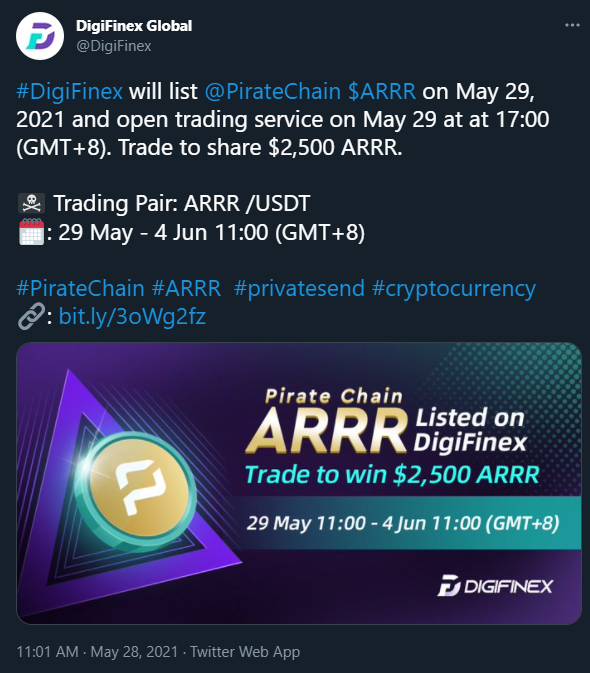
DigiFinex lists ARRR, becoming the nineteenth exchange to offer trading in Pirate Chain’s currency.
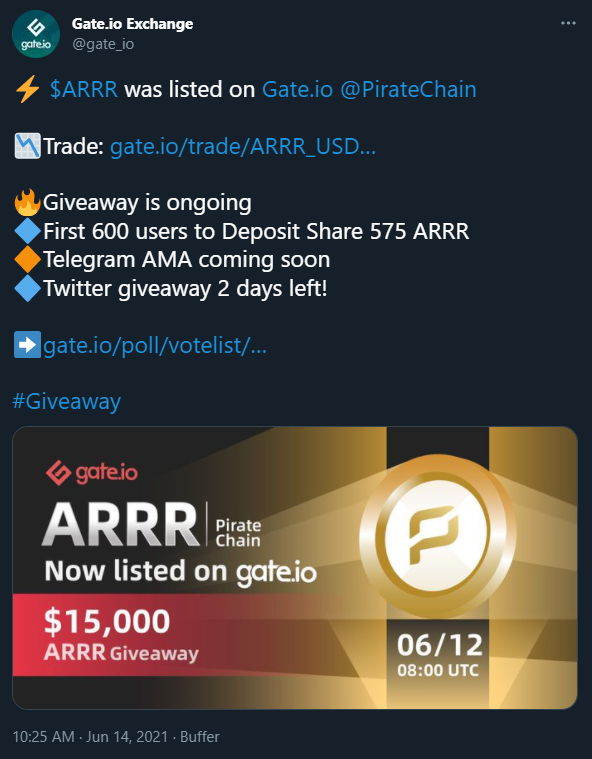
Gate.io lists ARRR, becoming the twentieth exchange to offer trading in Pirate Chain’s currency.
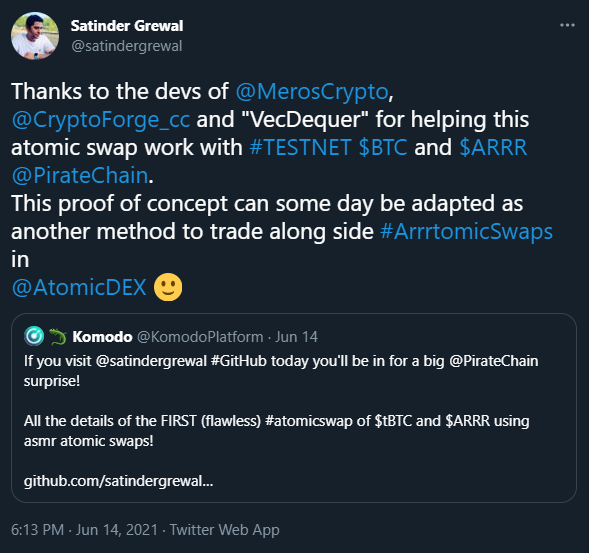
With help from MerosCrypto, CryptoForge, and VecDequer, Grewal Satinder completes the first flawless atomic swap using the ASMR method.
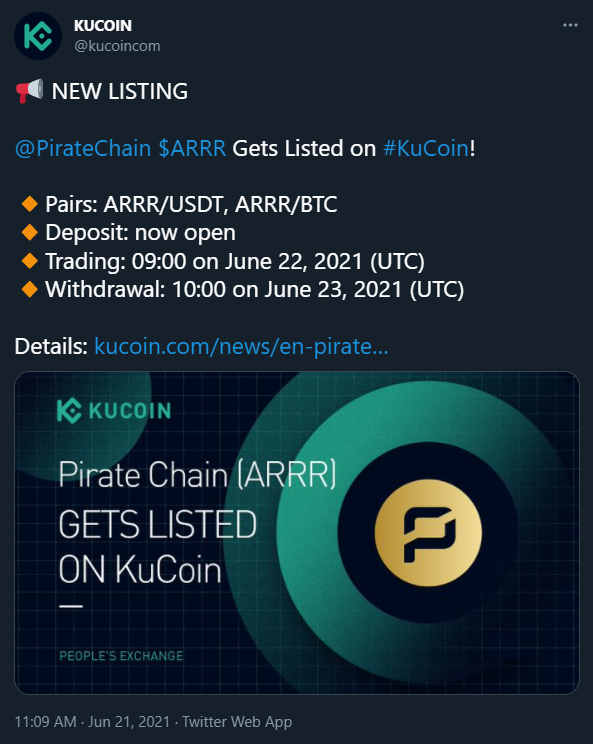
KuCoin lists ARRR, becoming the twenty-first exchange to offer trading in Pirate Chain’s currency.
The Pirate Chain team commissions a third-party light code audit (QA testing and security review) from Cyber Unit Technologies, which has previously worked with Cisco, Elrond, and FTX.
Treasure Chest v5.2.0 adds offline transaction signing and BIP39 seed phrases, allowing users to keep spending keys offline and recover wallets from a backup phrase.
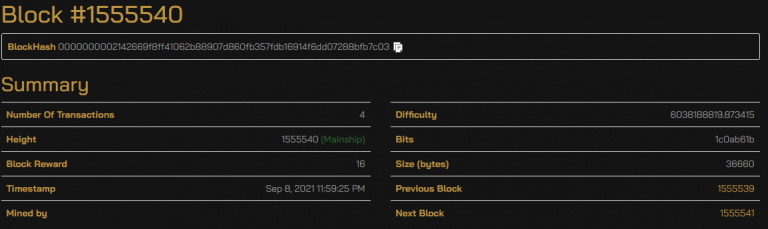
Pirate Chain’s block reward drops from 32 ARRR to 16 ARRR per block at the fourth halving.
Treasure Chest v5.3.0 adds encryption for wallet keys, transaction records and metadata, protecting more of a user’s private information if the wallet file is copied.
Treasure Chest v5.4.0 introduces TLS 1.3 encryption for peer-to-peer connections, helping protect network traffic from passive observers.
The Pirate Chain team commissions a third-party code audit of the Treasure Chest full node wallet from Jean-Philippe Aumasson, a cryptography expert, co-founder of Teserakt, and head of security at Taurus Group. Aumasson holds a Ph.D. from EPFL (2009) and has years of experience in applied cryptography, security architecture, and cybersecurity. He wrote Serious Cryptography (No Starch Press, 2017) and helped design widely used algorithms such as BLAKE2 and SipHash. He has performed numerous security assessments for blockchain and cryptocurrency organizations and has spoken at Black Hat, DEFCON, RSAC, CCC, and Infiltrate about applied cryptography, quantum computing, and platform security.
Pirate Chain releases an official animated explainer video, introducing ARRR and the project’s focus on privacy.
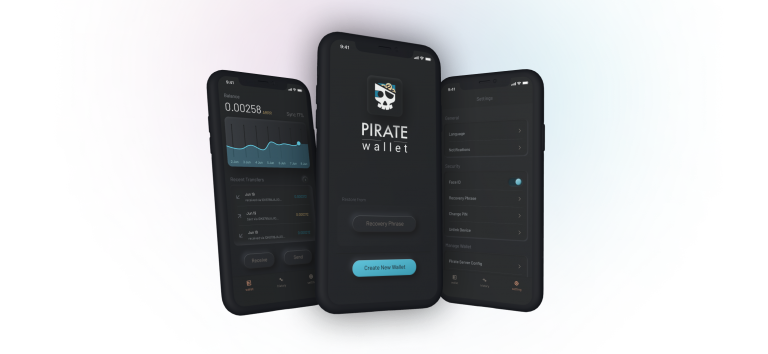
The iOS mobile wallet, developed by Meshbits Limited and the Pirate Wallet team, is officially released on the App Store.
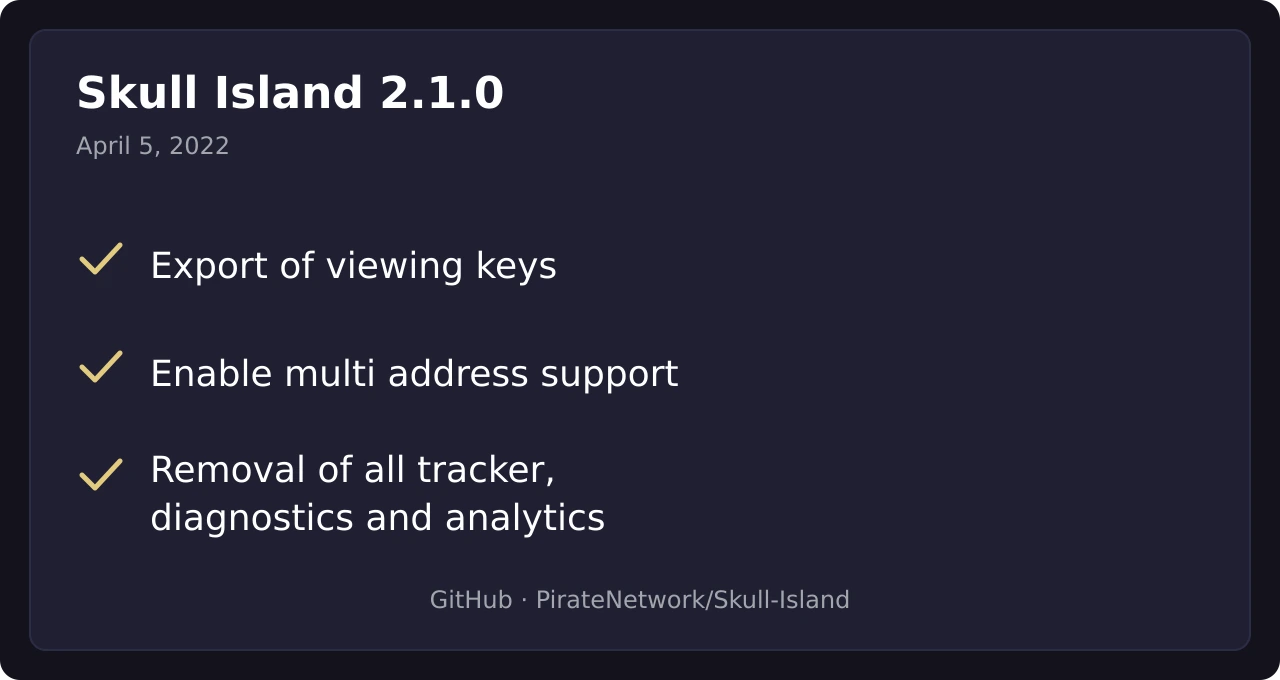
Skull Island v2.1.0 removes trackers, diagnostics and analytics from the Android wallet, while adding viewing-key export, multiple addresses and diversified-address support.
The Pirate Chain blockchain reaches 1,000,000 fully shielded peer-to-peer transactions.
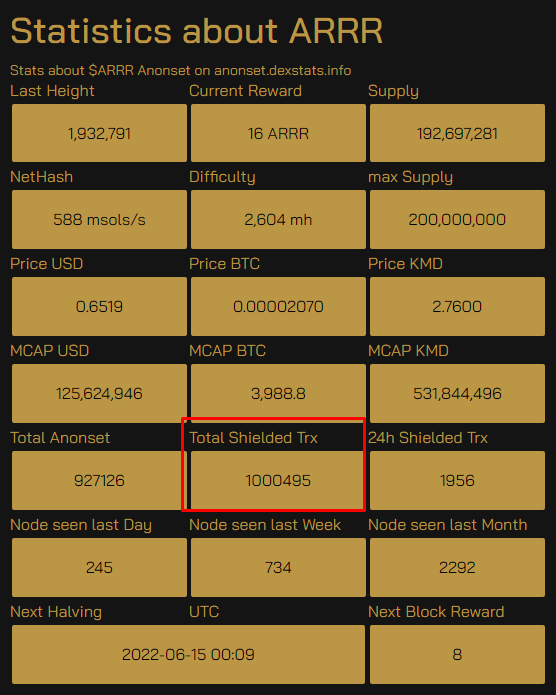
Pirate Chain’s block reward drops from 16 ARRR to 8 ARRR per block at the fifth halving.
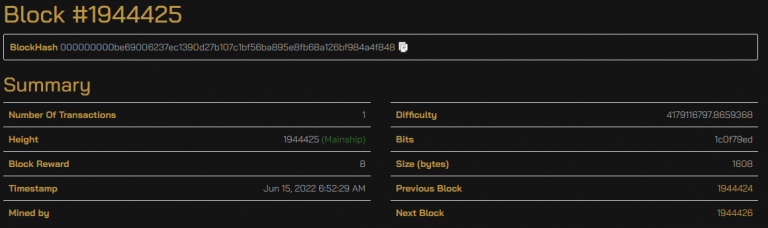
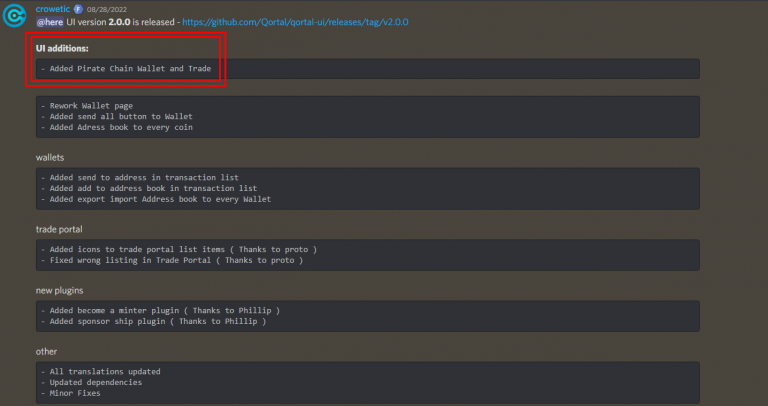
Qortal UI v2.0.0 adds a Pirate Chain wallet and trade support, bringing ARRR into its decentralized platform.
Pirate Chain introduces bARRRter, a classifieds marketplace where users can buy and sell goods and services with ARRR.
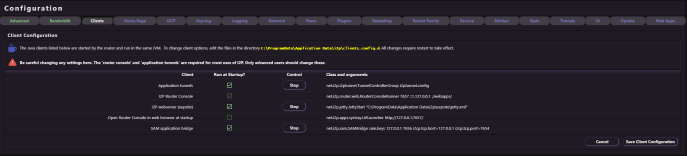
Treasure Chest v5.6.0 adds I2P and Tor v3 connections, helping users protect their network privacy.
AtomicDEX adds ARRR support to its desktop app, expanding the options for holding and exchanging ARRR.
Edge Wallet adds ARRR support, providing a mobile wallet for holding and exchanging the currency.

Lite Wallet v1.0.7 introduces faster BlazeSync and automatic fallback to validated backup servers, improving synchronization speed and connection reliability.
wARRR launches on Ethereum, giving wrapped ARRR access to DeFi through public ERC-20 token transactions.
A community member develops and launches https://localpiratechain.com/, where users can buy and sell ARRR for fiat currency with other users.

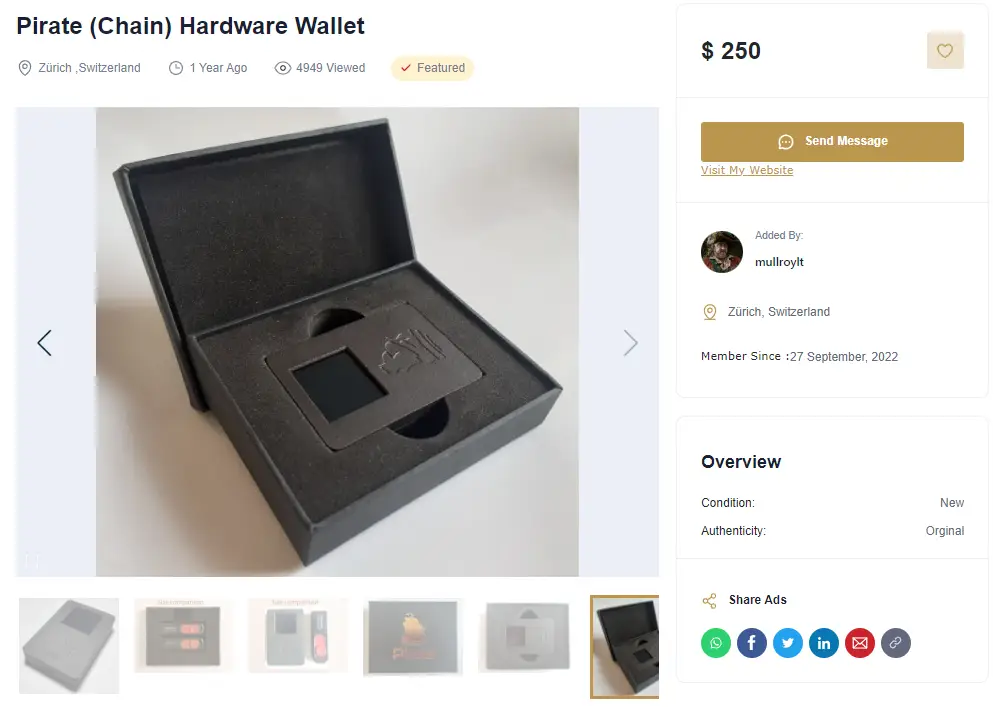
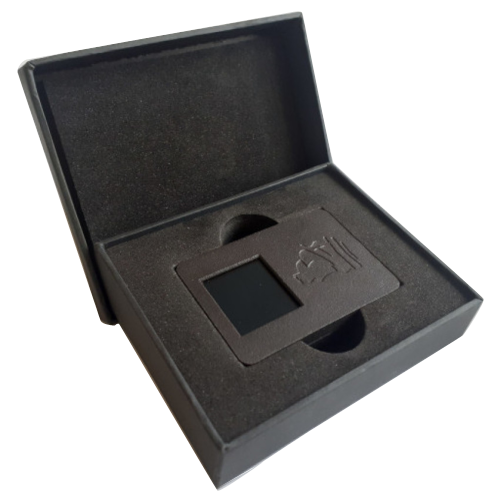
Pirate Chain announces unrestricted public sales of Mullroy’s ARRR hardware wallet, supporting offline transaction signing.
Pirate Chain announces an ARRR listing on Seven Seas, adding another exchange option without identity verification.

Pirate Chain announces ARRR trading on NonKYC, adding another exchange option without identity verification.

Pirate Chain reports a transaction spam attack that slowed the network, prompting work on wallet recovery and stronger spam prevention.
Pirate Chain announces a partnership with Exolix at Monerotopia, expanding access to ARRR through cryptocurrency swaps.
Treasure Chest v5.7.5 adds dust filtering, cleanup for spammed addresses and large-transaction throttling to help wallets and nodes recover from transaction spam.
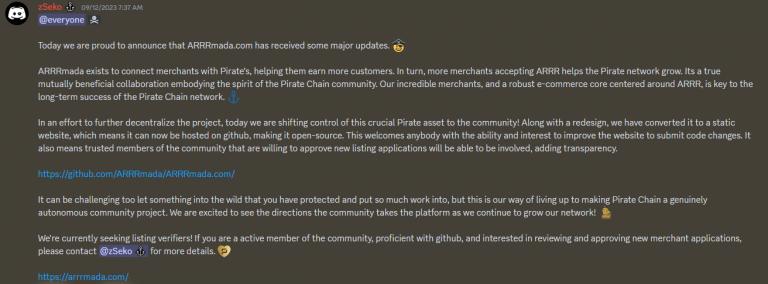
ARRRmada is decentralized by becoming an open-source static website hosted on GitHub.
KuCoin delists ARRR. Pirate Chain’s September update attributes the decision to KuCoin’s inability to trace the origin of deposited ARRR funds.

Support for the wARRR tokens on BSC and Ethereum, bridged through Aureus Trading, is discontinued following the security incident on February 17, 2023.
Pirate Chain’s block reward drops from 4 ARRR to 2 ARRR per block at the seventh halving.
MEXC lists ARRR, becoming the twenty-second exchange to offer trading in Pirate Chain’s currency.
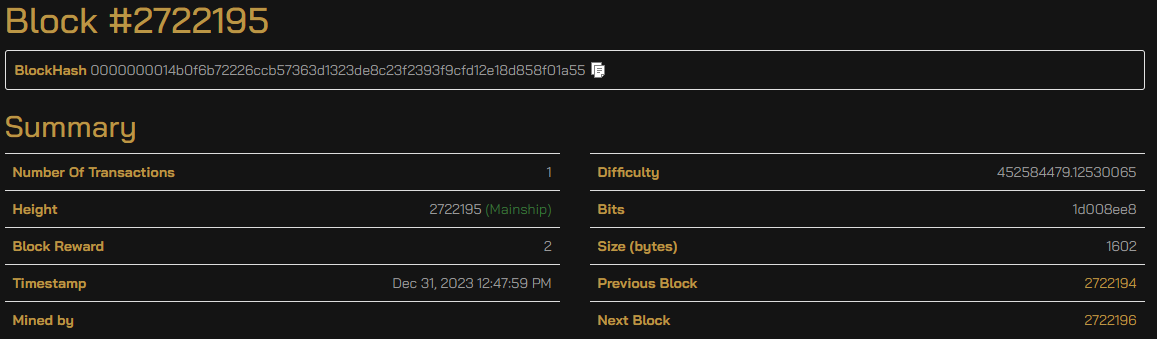
Treasure Chest v5.8.0 adds checks against reused Sapling proofs to mitigate transaction spam and improves syncing for heavily used wallets.
vARRR launches on Verus as its first PBaaS blockchain. Backed 1:1 by ARRR, it brings staking and decentralized finance options to the ecosystem.

Pirate Chain announces an upcoming ARRR listing on FinanceX, a centralized exchange.

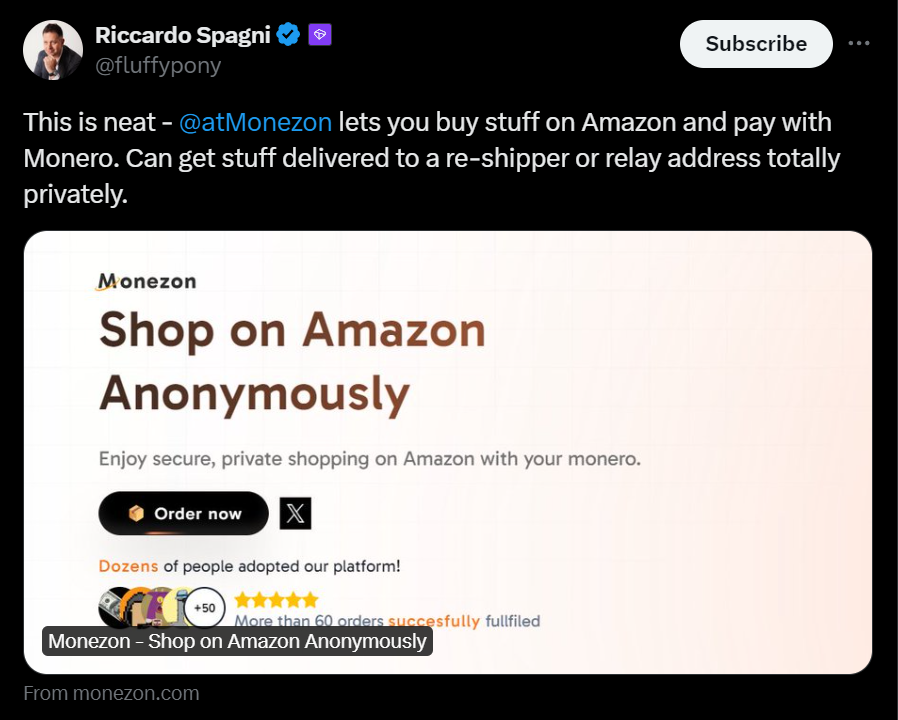
Pirate Chain announces ARRR payment support on Monezon, allowing users to shop on Amazon through a third-party service.
Pirate Chain announces Trocador as an ARRR merchant, offering gift cards, prepaid debit cards, and cryptocurrency swaps.

Pirate Chain announces ARRR payment support in Meile, a decentralized VPN that helps users protect their internet connections.

At block 3,111,080, Pirate Chain’s eighth halving reduces the mining reward from 2 ARRR to 1 ARRR per block.
At block 3,499,965, Pirate Chain’s ninth halving reduces the mining reward from 1 ARRR to 0.5 ARRR per block.
Pirate Chain launches a crowdfunding platform for community projects, using public viewing keys so contributors can verify donations.
CoinoSwap adds ARRR, expanding access to Pirate Chain through instant cryptocurrency swaps.

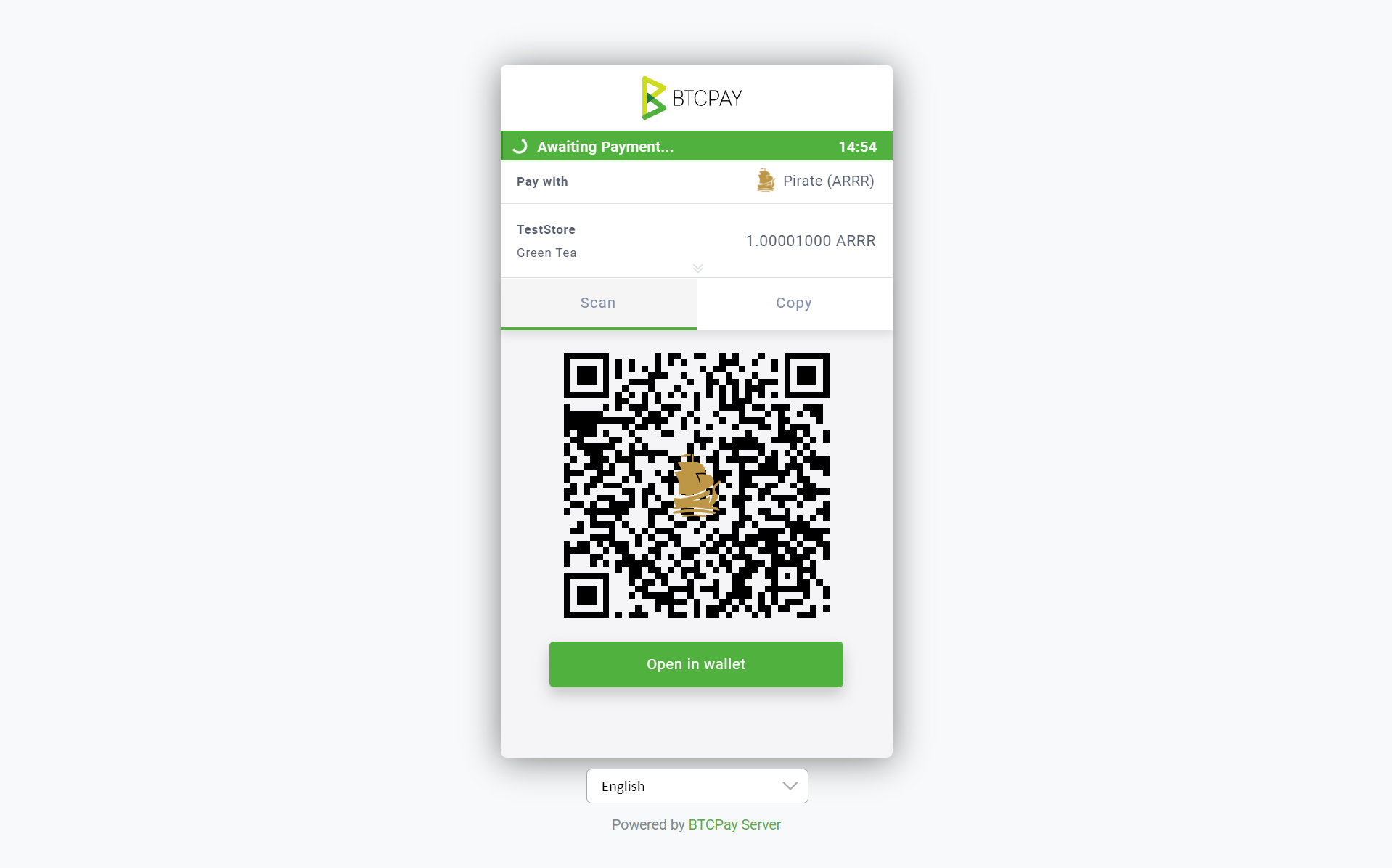
Pirate Chain announces completion of its community-funded BTCPay Server integration, enabling merchants to accept ARRR directly without a third-party payment processor.
MuteSwap adds ARRR, enabling swaps into Pirate Chain from more than 70 blockchains.

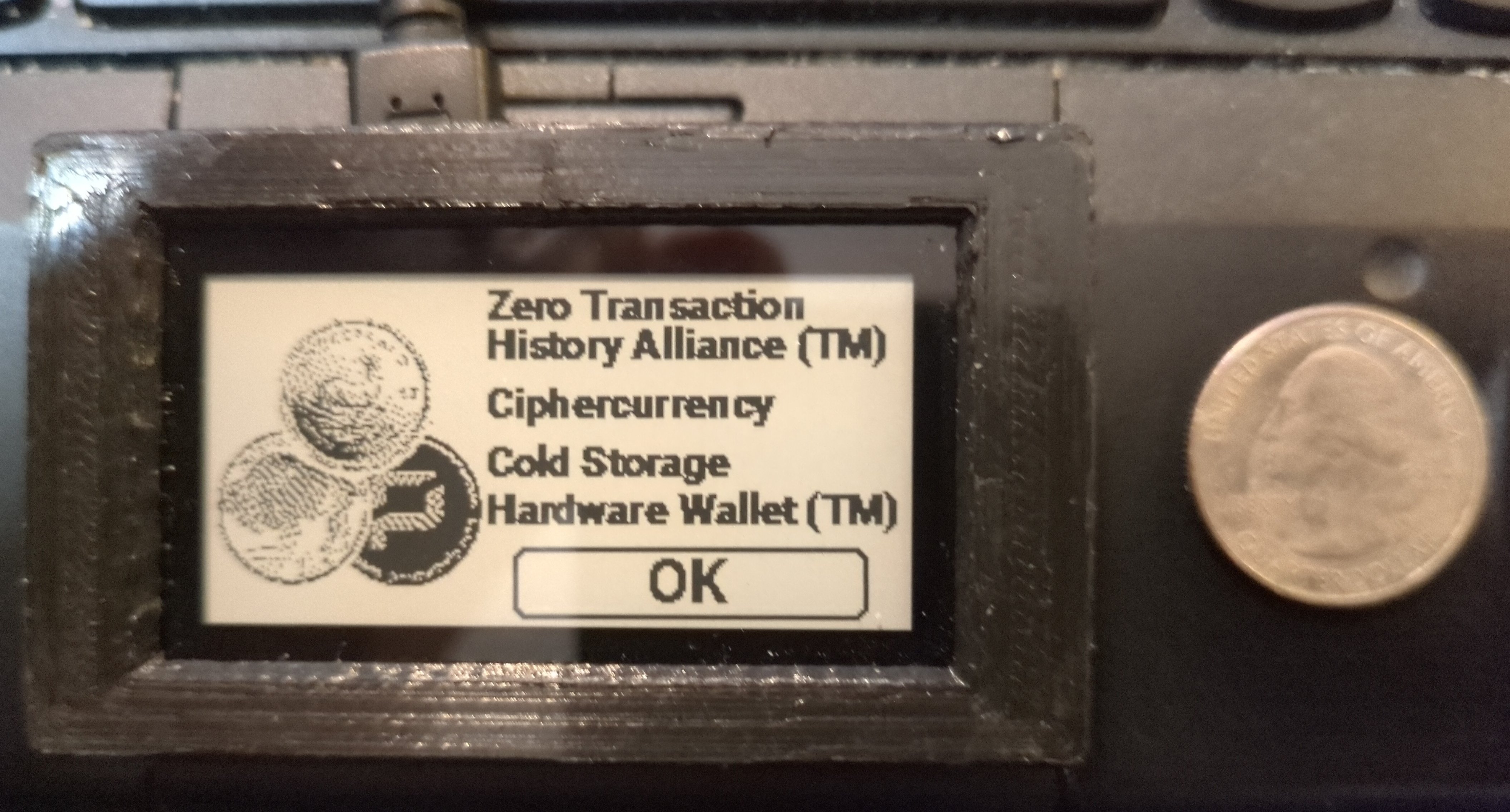
ZTH Alliance opens orders for the Cipher hardware wallet, a community-built ARRR device with a touchscreen and Treasure Chest transaction signing.
Pirate Chain reports a successful transition of its delayed Proof of Work security to Komodo Classic, maintaining notarization protection for the network.
Pirate Chain opens its Orchard public testnet, allowing the community to test Halo 2 transactions and wallet functionality before a mainnet upgrade.
At block 3,888,850, Pirate Chain’s tenth halving reduces the mining reward from 0.5 ARRR to 0.25 ARRR per block.
Pirate Chain announces public testing of its unified light wallet, alongside Android and iOS SDKs and a React Native plugin for wallet integrations.
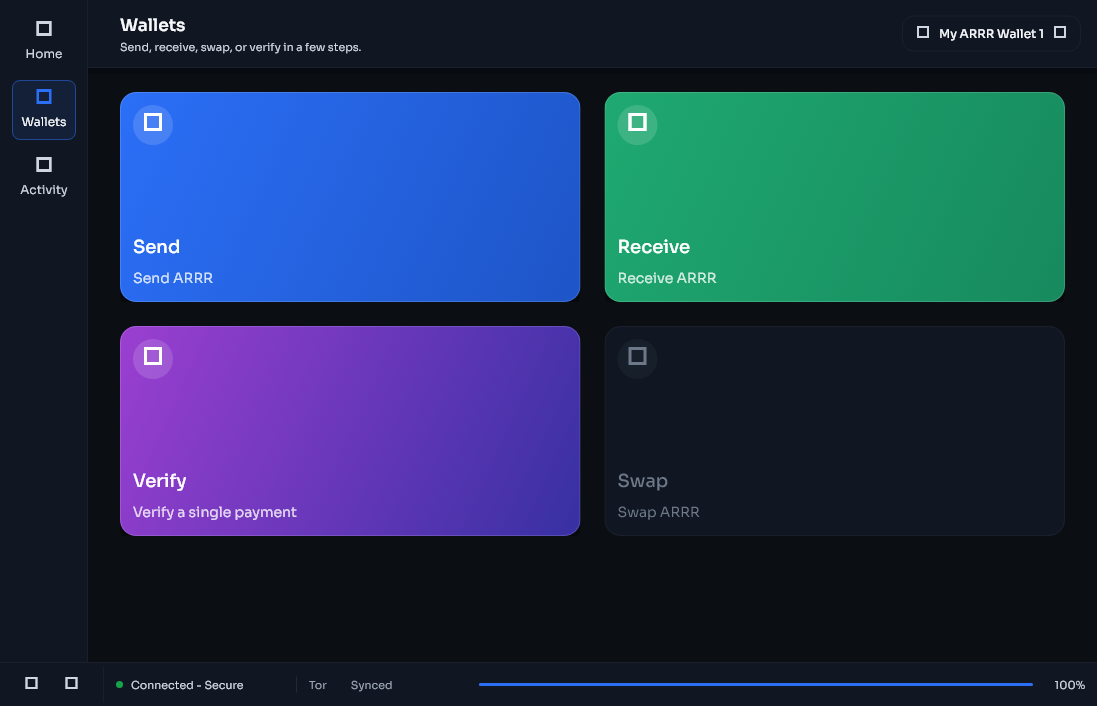
The unified wallet v1.1.2 beta adds payment disclosures, letting senders prove a single shielded payment without sharing the rest of their wallet history.
Treasure Chest v5.9.3 fixes denial-of-service vulnerabilities through a coordinated security response with Komodo and Komodo Classic.
Treasure Chest v6.0.0 manages Tor and I2P automatically and sends locally created transactions through privacy peers when available, using rotating I2P identities for stronger network privacy.
Treasure Chest v6.0.0 sets a fixed dPoW notarization requirement of at least six notary signatures from block 4,141,650, ahead of Ironwood activation.
Stashi v1.2.0 launches as Pirate Chain’s unified wallet for desktop and mobile, bringing faster Supernova Sync, multiple wallets, built-in Tor and desktop I2P.
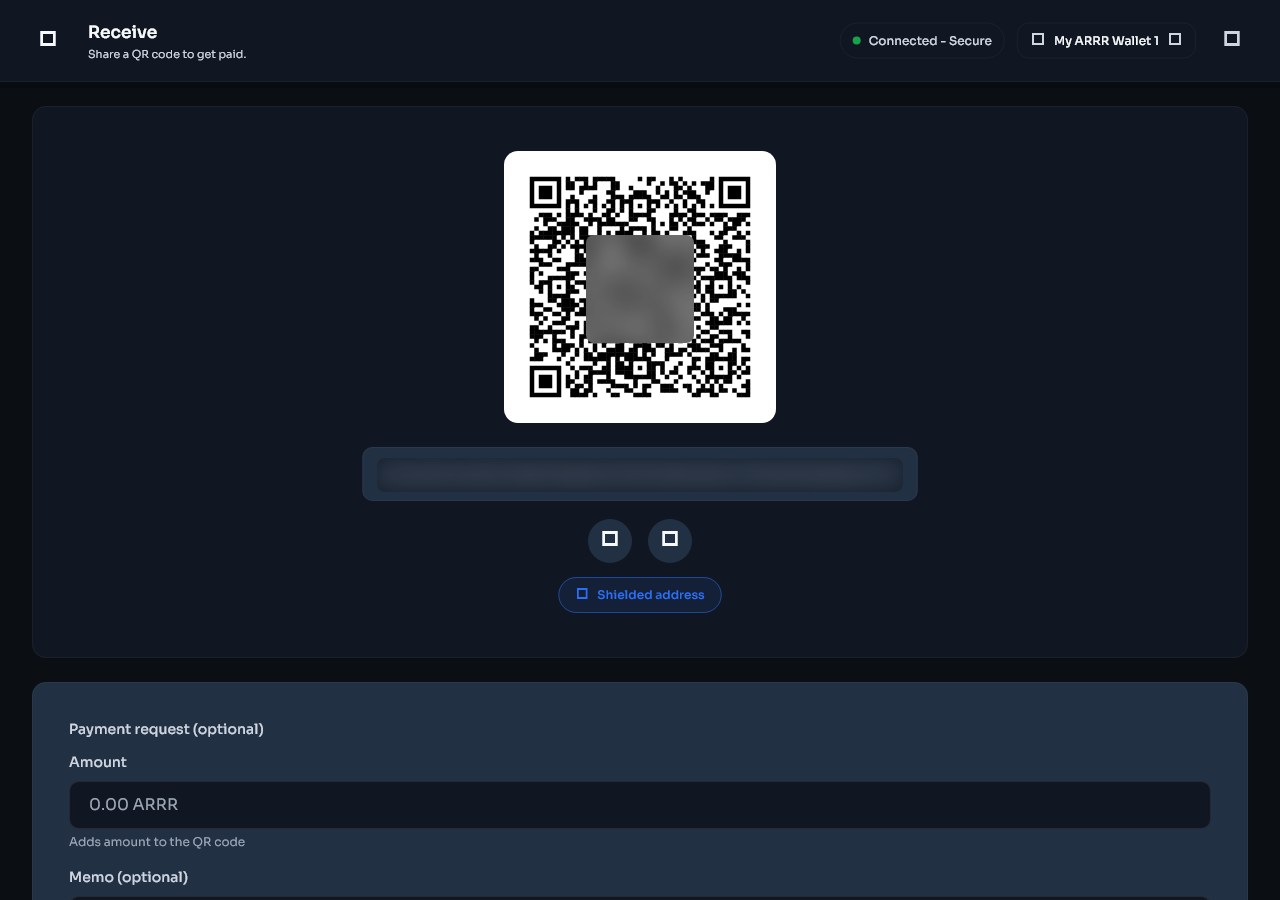
Stashi v1.2.0 supports shareable ARRR payment requests with amounts, memos and QR codes, making invoices easier to request and pay.
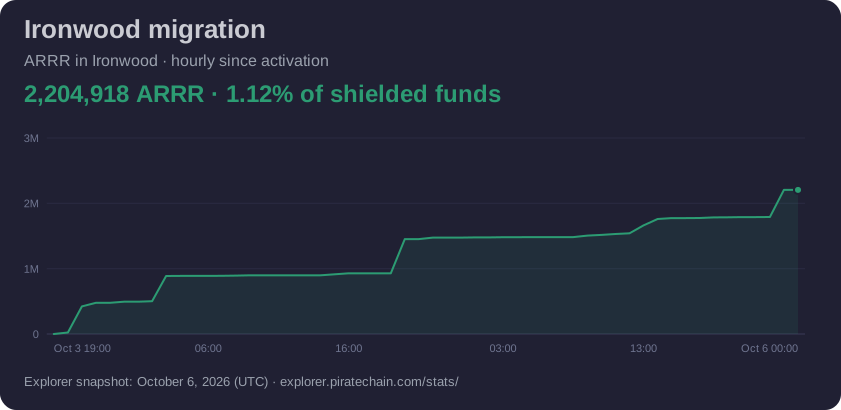
Ironwood activates at block 4,161,185, introducing a Halo 2 shielded pool without a trusted setup and block-wide rejection of reused Sapling proofs. Sapling remains supported.
ARRR begins moving from Sapling into Ironwood. The explorer’s updated Stats page tracks pool balances and migration progress.